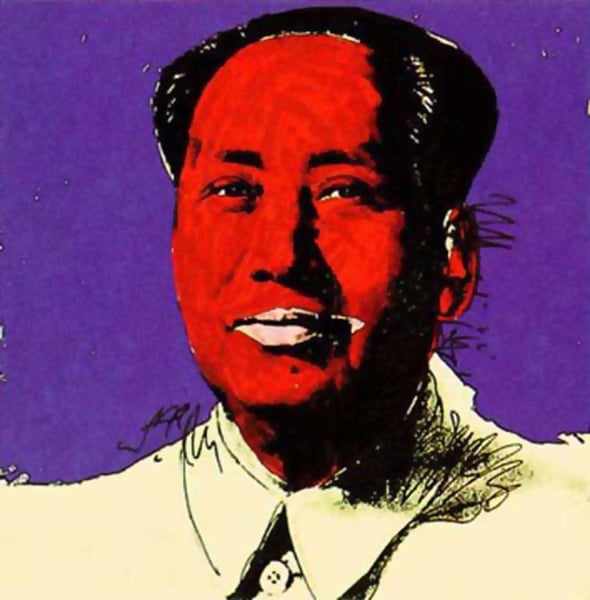
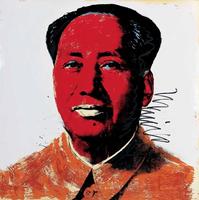
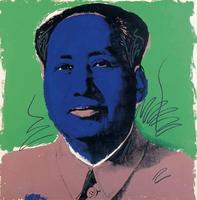
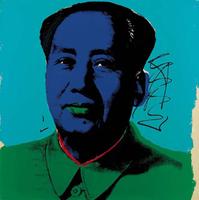
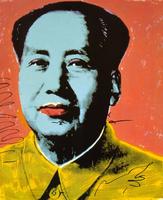
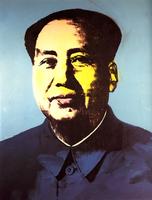
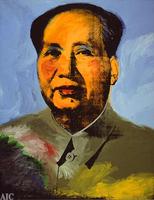
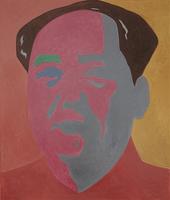
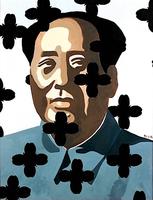
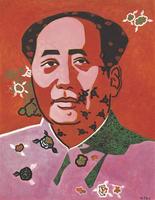
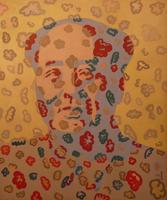
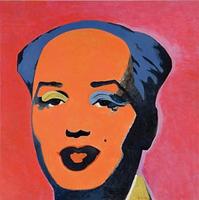
Andy Warhol’s Mao is a landmark of Pop Art, a movement that blurred the boundaries between high art and mass culture. As a portrait, it transforms the Chairman of the Chinese Communist Party into a celebrity icon on par with Warhol’s Marilyns and Elvises. The work is significant for its use of Warhol’s signature silkscreen technique—flattening the image into high-contrast, garish colors that divorce Mao from his original propaganda context. By repeating the portrait in series, Warhol critiques the mass production of political imagery, suggesting that leaders, like consumer goods, are commodified and endlessly reproducible. The bold, unnatural hues (bright pinks, greens, and yellows) further emphasize the artificiality of political idolatry, making Mao a quintessential example of how Pop Art could simultaneously celebrate and subvert modern iconography.