Analisi esperta di Mao Zedong: AO di Wang Guangyi
Stile: Neo-Pop Art · Genere: figurative
Expert Analysis: "Mao Zedong: AO" by Wang Guangyi
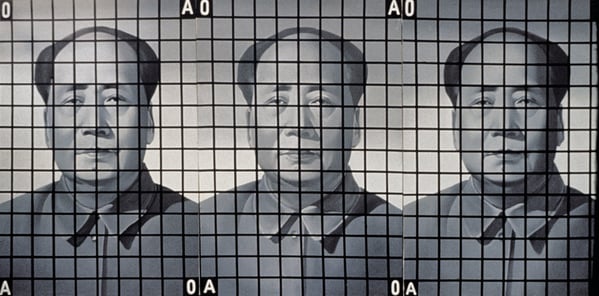
Wang Guangyi’s "Mao Zedong: AO" stands as a defining work of Chinese Neo-Pop Art, a movement that emerged in the 1990s as a critical response to the rapid commercialization of post-Mao China. At its core, the painting merges the iconic, deified portrait of Chairman Mao Zedong—the supreme symbol of the Communist Revolution—with the crisp, corporate branding of Western consumer goods (the "AO" likely referencing a well-known product logo, such as A.O. Smith or a generic brand). This jarring juxtaposition is the artist’s signature strategy, drawn from his landmark Great Criticism series, and it is precisely this collision that makes the work significant.
Significance within Neo-Pop Art and Chinese Contemporary Art:
-
Critique of Ideology and Consumerism: The artwork exemplifies how Chinese Neo-Pop adapted Western Pop Art’s use of mass-media imagery to address local political realities. By placing Mao’s stern, propagandistic face—borrowed from Cultural Revolution posters—against a sanitized corporate label, Wang flattens both into equal commodities. The leader’s authority is no longer untouchable; it is packaged, marketed, and stripped of its revolutionary aura, mirroring China’s shift from a planned economy to a market-driven superpower.
-
Historical Amnesia and Commodity Fetishism: The painting forces the viewer to confront how revolutionary memory is repurposed for commercial gain. The "AO" logo, rendered with the same bold, graphic clarity as Mao’s portrait, suggests that political iconography has become just another brand to be consumed. This reflects the broader phenomenon of "red tourism" and the savvy marketing of Mao’s image on everything from cigarette lighters to luxury goods.
-
Formal Innovation: Wang achieves his effect through a deadpan, airbrushed precision reminiscent of Andy Warhol’s silkscreens, but infuses it with a distinctly Chinese visual vocabulary—flat planes of primary color, hard edges, and the bold, stark lines of political propaganda posters. The result is a cool, ironic detachment that distances the viewer from the original emotional weight of Mao’s image, allowing for a critical gaze.
-
Transnational Dialogue: By inserting a generic Western logo, Wang comments on the global flows of capital and culture. The "AO" stands for American (or international) corporate standards, invading the sacred space of Chinese revolutionary iconography. This makes the artwork a powerful statement about globalization’s erasure of distinct political identities.
In sum, "Mao Zedong: AO" is significant not only as a masterful fusion of Pop and propaganda but as a philosophical inquiry into how power, memory, and commerce intertwine in the contemporary Chinese experience. It remains a touchstone for understanding how art can simultaneously celebrate and subvert official imagery, occupying a space where reverence and critique are inseparable.
Visivamente simili
20 opere con composizione e palette affini
Mao: Pattern Print
Yu Youhan
Mao
Andy Warhol
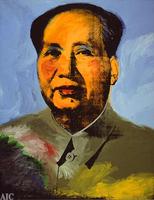
Mao
Andy Warhol
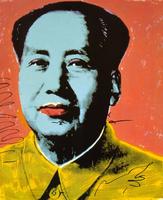
Mao
Andy Warhol
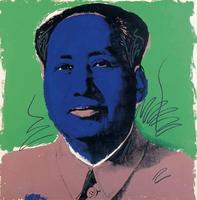
Mao
Andy Warhol
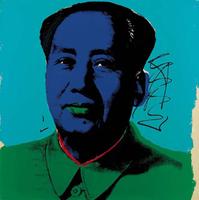
Mao
Andy Warhol
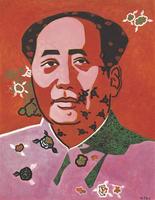
Mao Image in Rose
Yu Youhan
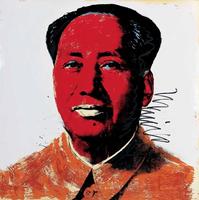
Mao
Andy Warhol
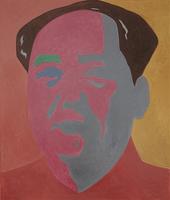
Mao
Yu Youhan
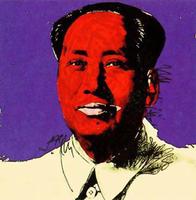
Mao
Andy Warhol
Sun Mu
Sun Mu
Mao Decorated
Yu Youhan
Mao
Yu Youhan
Untitled
Sun Mu
Bloodline - Big Family
Zhang Xiaogang
Mao
Yu Youhan
Mao
Yu Youhan
Mao Zedong
Romero Britto
Two Chinese Generals
Patrick Procktor
A Big Family
Zhang Xiaogang