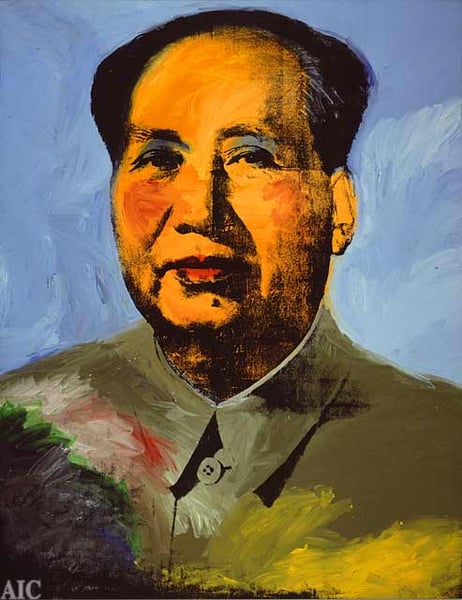
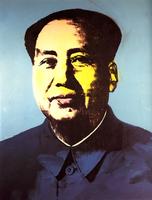
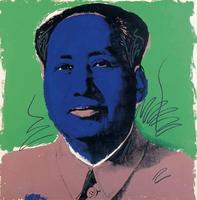
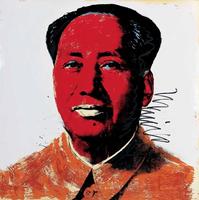
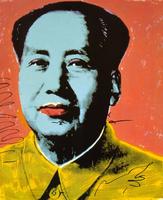
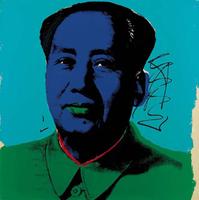
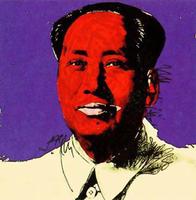
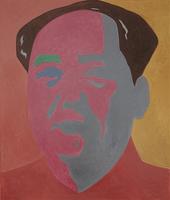
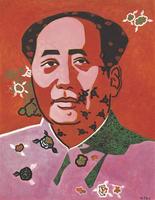
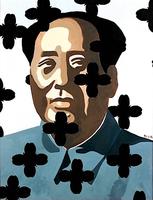
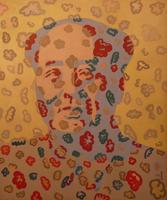
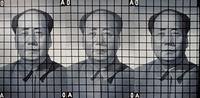
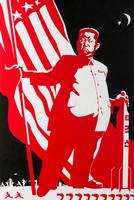
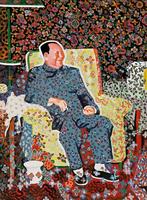
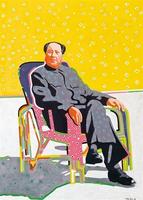
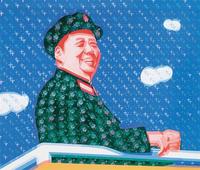
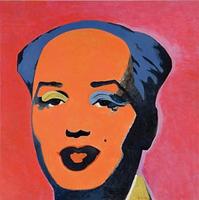
Andy Warhol’s Mao is a quintessential Pop Art portrait that redefines the genre by appropriating a political figure as a mass-media icon. The work’s significance lies in its alignment with Pop Art’s core strategy: elevating readymade, reproducible imagery—here, the official portrait of Mao Zedong—to the status of fine art through silkscreen repetition and bold, flat color. By stripping the subject of traditional heroic or psychological depth, Warhol transforms Mao into a commodity-like brand, mirroring how media and propaganda reduce leaders to simplified, reproducible symbols. The portrait’s repetitive, serial presentation (common in Warhol’s practice) underscores Pop Art’s critique of consumer culture and fame, equating political power with celebrity. Within the style, Mao stands as a provocative commentary on icon-making, authoritarianism, and the blurring of high art with political spectacle—distinct from earlier portrait conventions.