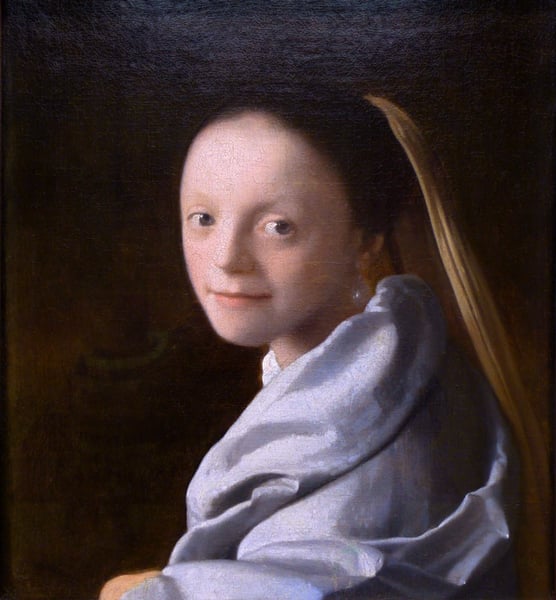
"Study of a young woman" by Johannes Vermeer is a compelling example of Baroque portraiture that fuses the conventions of the tronie—a character study focused on expression, costume, and mood rather than a specific sitter—with the masterful handling of light and texture characteristic of the Dutch Golden Age. Within the Baroque period, Vermeer elevates the genre by achieving an uncanny intimacy and psychological depth through a restrained, almost quiet composition. The work’s significance lies in how it transcends the typical tronie’s emphasis on exotic or exaggerated features; instead, it presents a serene, contemplative figure, whose soft features and subtle play of light on skin and fabric embody the Baroque obsession with naturalism and the fleeting moment. This painting demonstrates Vermeer’s unique ability to marry the genre’s anecdotal roots with the period’s broader pursuit of truth and beauty, making it a cornerstone of Baroque portraiture that prioritizes human presence over narrative.