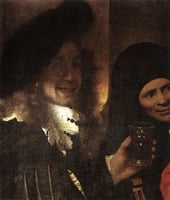
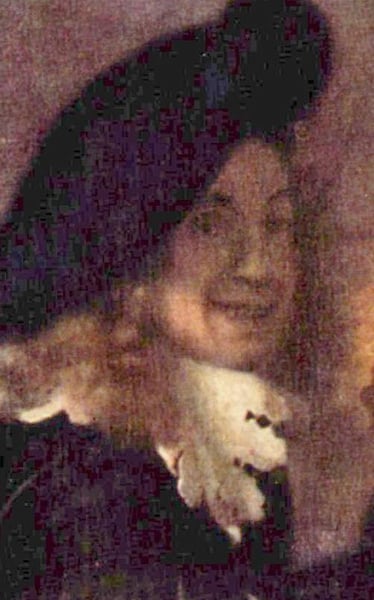
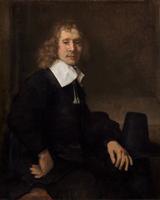
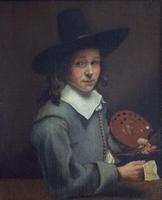
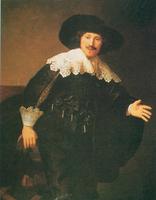
This detail from Johannes Vermeer’s “The Procuress” is significant as one of the very few—and most plausible—self-portraits by the artist. Created in the Baroque style, the work functions both as a genre scene and a self-portrait, merging personal identity with the period’s theatrical realism. In this fragment, the figure traditionally identified as Vermeer is depicted in the act of looking out, engaging the viewer directly. This dual role places the painter within a narrative of moral complexity (the procuress theme), a typical Baroque interest in everyday life charged with allegory. The handling of light and intimate scale, even in a detail, foreshadows Vermeer’s later mastery. As a self-portrait embedded within a larger composition, it offers a rare glimpse of the artist’s own face while demonstrating how Baroque artists often inserted themselves into their works—blurring the line between observer and participant.