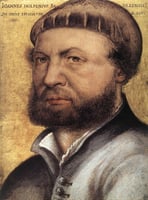
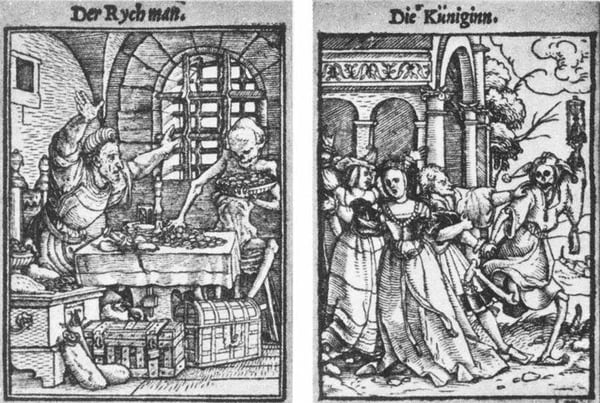
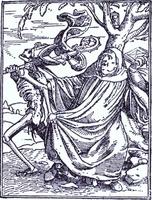
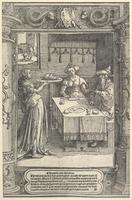
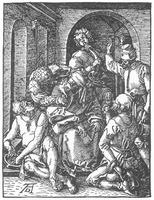
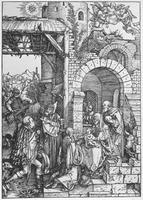
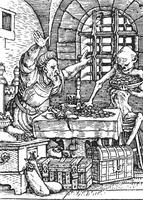
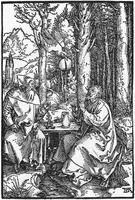
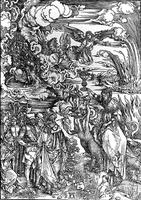
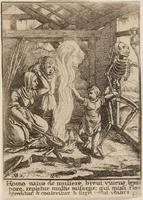
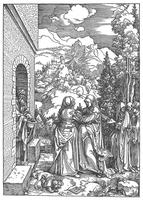
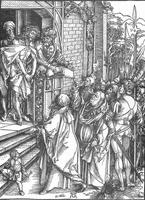
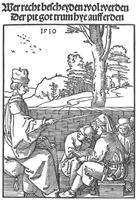
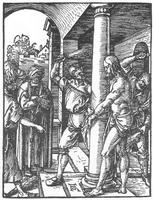
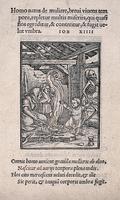
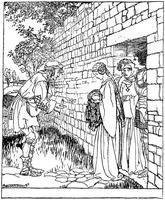
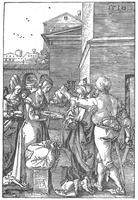
"The Rich Man The Queen," an allegorical painting by Hans Holbein the Younger, exemplifies the Northern Renaissance’s fusion of meticulous naturalism with layered moral symbolism. While the title suggests a confrontation between material wealth and royal authority, the work is significant for its subtle critique of vanity and power, typical of Holbein’s humanist approach. Every meticulously rendered detail—from the rich man’s opulent fur and gold coins to the queen’s regal yet weary expression—serves as a memento mori, reminding viewers of the transience of earthly status. Holbein elevates the allegorical genre by embedding complex narratives within seemingly straightforward portraits, using his unparalleled precision to make abstract concepts tangible. This painting stands as a masterful example of Northern Renaissance art’s ability to blend realism with profound philosophical inquiry.