
Expertenanalyse zu Albrecht Durers The Whore of Baylon
Stil: Northern Renaissance · Genre: religious painting
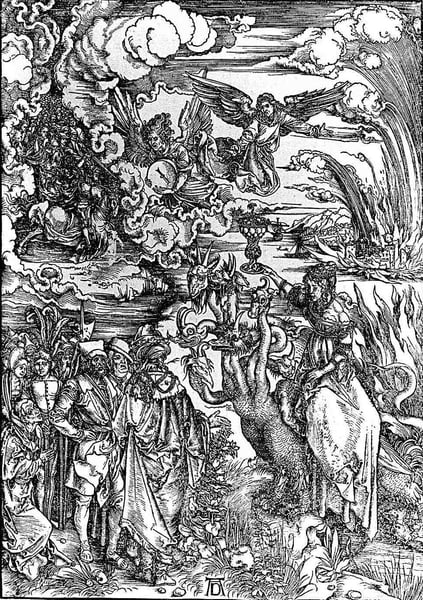
This artwork is a powerful example of Albrecht Dürer’s mastery in the Northern Renaissance—specifically, it is one of the fifteen woodcuts from his groundbreaking Apocalypse series (1498). The correct title is The Whore of Babylon, based on the Book of Revelation.
Significance within style and period:
-
First artist-published book: Dürer not only created the images but also published the book himself, a radical move for the time. He integrated the text of Revelation on the reverse of each full-page woodcut, making the image and word inseparable—a pioneering fusion in printmaking.
-
Technical virtuosity: The woodcut displays Dürer’s exceptional skill in rendering intricate detail, deep chiaroscuro, and dramatic texture using only line. The Whore of Babylon is shown riding the seven-headed beast, richly dressed and crowned, while holding a golden cup “full of abominations.” The composition is dense with symbolic elements: the beast’s heads, the martyrs at her feet, and the apocalyptic landscape—all carved with a precision that elevates woodcut to fine art.
-
Northern Renaissance realism and symbolism: Unlike contemporary Italian Renaissance art’s idealization, Dürer grounds his scene in gritty, naturalistic detail (the folds of fabric, the scales of the beast, the expressions of the figures). Yet every element carries theological meaning—the cup, the crown, the grotesque beast—embodying the period’s blend of observed reality and layered symbolism.
-
Emotional and political undercurrent: Dürer’s Apocalypse resonated with late-15th-century anxieties about church corruption and the end of days. The Whore of Babylon was often interpreted as a symbol of papal Rome, making this print a subtle but potent critique—a hallmark of Northern Renaissance engagement with contemporary moral and religious issues.
In sum, The Whore of Babylon is significant for its pioneering self-publishing, technical command, and its synthesis of realistic detail with complex allegory—defining qualities of Dürer’s Northern Renaissance legacy.
Museum / Gallery
Visuell ähnlich
20 Werke mit ähnlicher Komposition und Farbpalette
The Opening of the Fifth and Sixth Seals
Albrecht Durer
Four Angels Staying the Winds and Signing the Chosen
Albrecht Durer
The Sea Monster and the Beast with the Lamb s Horn
Albrecht Durer
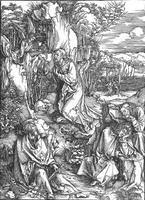
Christ on the Mount of Olives
Albrecht Durer
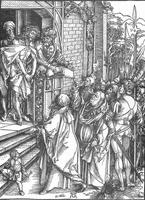
Ecce Homo
Albrecht Durer
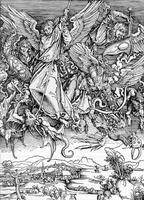
St Michael Fighting the Dragon
Albrecht Durer
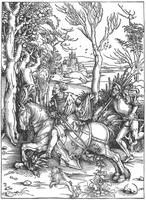
The Knight and the Landsknecht
Albrecht Durer
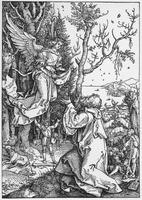
Joachim and the Angel from the 'Life of the Virgin'
Albrecht Durer
Christ on the mount olive
Albrecht Durer
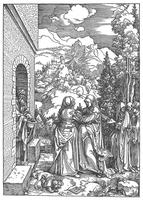
The Visitation
Albrecht Durer
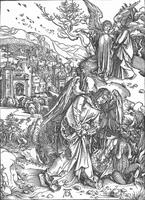
The Angel with the Key to the Bottomless Pit
Albrecht Durer
The Dance of Saint Mary Magdalene
Lucas van Leyden
Christ on the Mount of Olives
Albrecht Durer
Martyrdom of St Sebastian
Albrecht Durer
Martyrdom of the Ten Thousand
Albrecht Durer
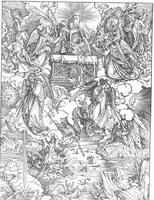
The Seven Trumpets Are Given to the Angels
Albrecht Durer
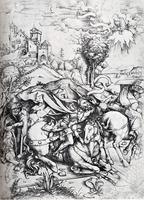
The Conversion Of St. Paul
Albrecht Durer
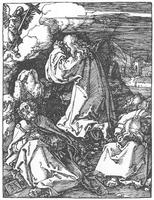
Christ on the Mount of Olives
Albrecht Durer
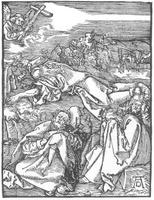
Jesus Christ on the Mount of Olives
Albrecht Durer
Zoo Oude als Nieuwe
Jacob Cats