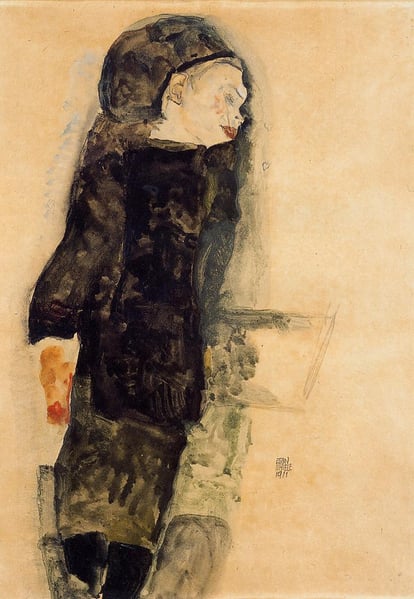
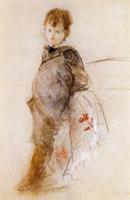
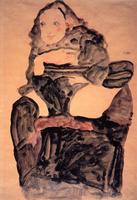
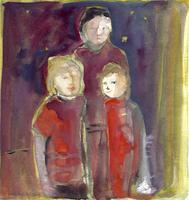
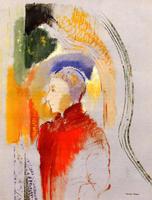
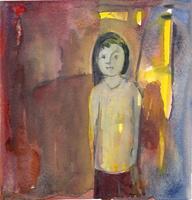
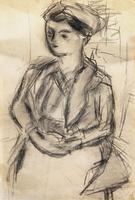
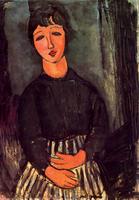
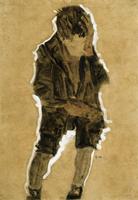
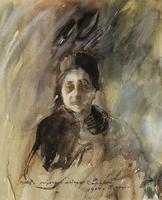
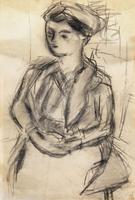
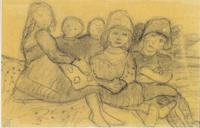
Egon Schiele's Child in Black is a defining Expressionist portrait that subverts traditional representations of childhood. In keeping with the movement's core values, Schiele abandons naturalistic detail for psychological intensity: the child's pallid skin, angular limbs, and stark dark clothing evoke vulnerability and existential unease rather than innocence. The work's significance lies in how it transforms a conventional genre into a vehicle for raw emotion—a hallmark of Expressionism—while demonstrating Schiele's radical approach to form, where distorted proportions and a tense, sparse composition amplify the subject's inner life. This portrait stands as a potent example of early 20th-century art's shift from external likeness to internal truth.