Woman with a Mirror
Expertenanalyse zu Kitagawa Utamaros Woman with a Mirror
Stil: Ukiyo-e · Genre: genre painting
Artwork Analysis: "Woman with a Mirror" by Kitagawa Utamaro
Style: Ukiyo-e
Genre: Genre painting
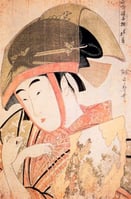
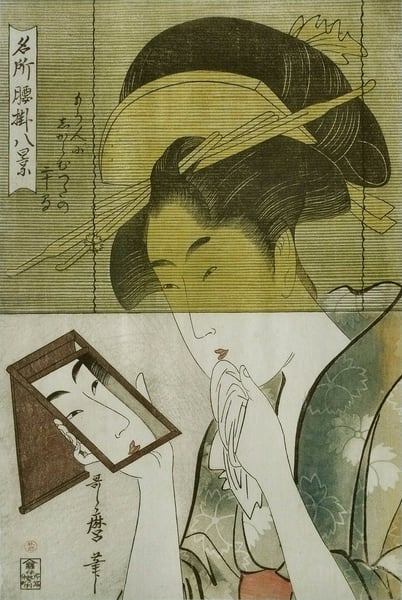
Kitagawa Utamaro’s Woman with a Mirror stands as a quintessential example of ukiyo-e’s bijin-ga (pictures of beautiful women), elevating a moment of private grooming into a study of subtle psychology and formal elegance. Within the genre painting tradition, Utamaro specialized in intimate scenes of everyday life—especially the lives of courtesans and women of the pleasure quarters—and this work exemplifies his ability to transform a routine act into a deeply resonant image.
Significance within Ukiyo-e:
- Mastery of Line and Composition: Utamaro deploys the characteristic ukiyo-e kabuki-mono (exaggerated, expressive line) with extraordinary precision. The woman’s silhouette, the fall of her kimono, and the curve of her arm as she holds a hand mirror create a rhythmic, almost calligraphic flow. The mirror’s circular frame echoes the roundness of her face, drawing the viewer’s eye into a closed, meditative loop.
- Psychological Depth: Unlike many ukiyo-e artists who focused on decorative surface beauty, Utamaro captures a moment of introspection. Her downcast gaze, directed not at the viewer but at her own reflection, suggests self-awareness or melancholy. This psychological nuance was groundbreaking for the genre, which often emphasized idealized or performative feminine beauty.
- Sensual Restraint: The work is notable for its economy of detail—a single mirror, a simple hairstyle, a muted palette of greys and soft pinks. Utamaro avoids overt eroticism (common in the shunga subgenre) in favor of a quiet, almost voyeuristic intimacy. This restraint influenced later artists, including the Impressionists and Post-Impressionists, who admired ukiyo-e’s ability to suggest emotion through minimal means.
- Reflection and Vanity: The mirror, a recurring motif in ukiyo-e, here serves dual symbolism: it is a tool of vanity but also a window into the subject’s inner world. By obscuring the reflected face (or showing it partially), Utamaro underscores the tension between private identity and public persona—a theme central to the floating world (ukiyo) philosophy.
Conclusion:
Woman with a Mirror is significant not merely as a genre scene of a woman at her toilette, but as a masterclass in how ukiyo-e can blend decorative beauty with profound human insight. Utamaro’s delicate line, subtle color harmonies, and psychological nuance elevate this work from a simple portrayal to a meditation on selfhood, making it a landmark in the evolution of Japanese printmaking and a bridge to modern art’s interest in the subjective gaze.
Visuell ähnlich
20 Werke mit ähnlicher Komposition und Farbpalette
Portrait of Naniwaya Okita
Kitagawa Utamaro
Secret love
Kitagawa Utamaro
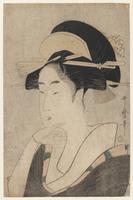
Large Head and Bust Portrait of Beauty
Kitagawa Utamaro
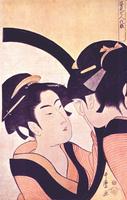
Beauty at toilet
Kitagawa Utamaro
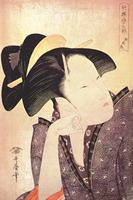
Pensive love
Kitagawa Utamaro
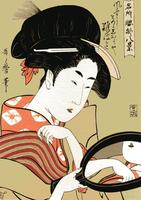
Utamaro Okita
Kitagawa Utamaro
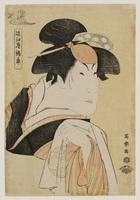
Kabuki Actor Nakayama Tomisaburō I as Ohisa, Wife of Sazanami Tatsugorō, Actually Teriha, the Younger Sister of Sadatō (aiban)
Tōshūsai Sharaku
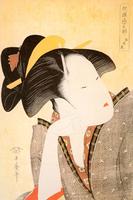
Geisha
Kitagawa Utamaro
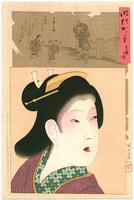
Kyouhou - Mirror of the Ages
Toyohara Chikanobu
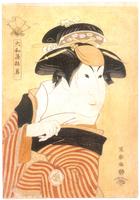
Iwai Hanshirō IV as San, the maid servant of Ukiyonosuke, actually Saeda, the younger sister of Sabanosuke
Tōshūsai Sharaku
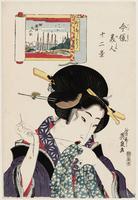
(Otonashisô, Tsukuda Shinchi no irifune), from the series Twelve Views of Modern Beauties (Imayô bijin jûni kei)
Keisai Eisen
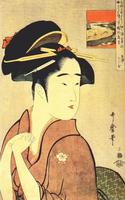
The geisha kamekichi
Kitagawa Utamaro
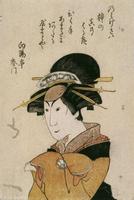
The Actor in Female Role
Utagawa Kunisada
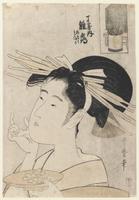
Midori of the Hinataka, from The Hour of the Rat
Kitagawa Utamaro
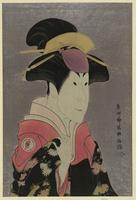
Segawa Tomisaburō as Yadorigi, Wife of Ogishi Kurando, by Tōshūsai Sharaku
Tōshūsai Sharaku
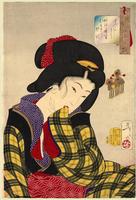
Looking shy - The appearance of a young girl of the Meiji era
Tsukioka Yoshitoshi
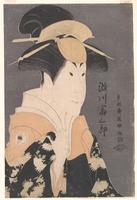
Segawa Tomisaburō II as Yadorigi in the Play "Hana Ayame Bunroku Soga"
Tōshūsai Sharaku
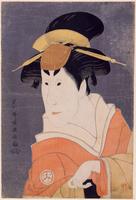
Kabuki Actor Osagawa Tsuneyo II, Possibly in the Rôle of Ippei's Sister Osan
Tōshūsai Sharaku
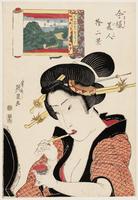
Fukagawa Hachiman no Shin Fuji, from the series Twelve Views of Modern Beauties (Imayô bijin jûni kei)
Keisai Eisen
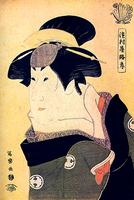
Kikunojō Segawa III as Nakai Ohama in Hana No Miyako Kuruwa No Nawabari
Tōshūsai Sharaku