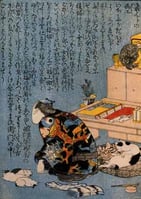
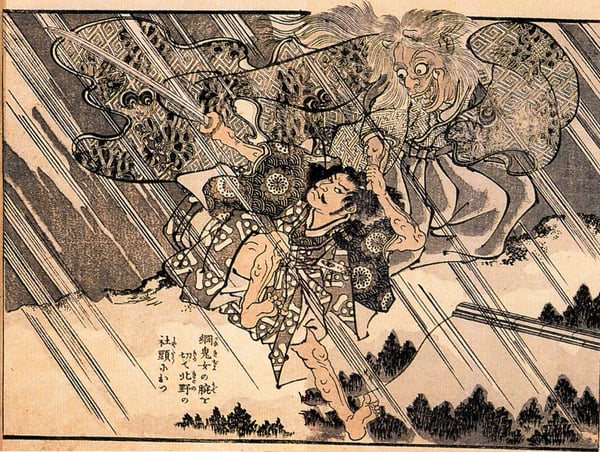
Heroes of china and Japan
Expertenanalyse zu Utagawa Kuniyoshis Heroes of china and Japan
Stil: Ukiyo-e · Genre: mythological painting
Expert Analysis of Heroes of China and Japan by Utagawa Kuniyoshi
Utagawa Kuniyoshi’s Heroes of China and Japan stands as a masterful example of late-Edo period ukiyo-e, distinguished by its ambitious fusion of mythological and historical figures from two distinct cultural traditions. Within the ukiyo-e canon, Kuniyoshi is celebrated for his dynamic warrior prints (musha-e) and supernatural scenes, and this work exemplifies his ability to animate legendary narratives with dramatic energy and compositional flair.
Stylistic Significance
Kuniyoshi employs the classic ukiyo-e vocabulary of bold, sinuous outlines and vibrant, flat color fields, yet he pushes the genre toward heightened theatricality. The heroes are arranged in a swirling, frieze-like composition that suggests both movement and monumental presence. Each figure is individualized through distinctive armor, weaponry, and facial expressions, ranging from fierce determination to serene valor. The use of overlapping forms and asymmetrical balance creates a sense of chaotic yet controlled action, a hallmark of Kuniyoshi’s best battle and mythological scenes. This work also reflects the ukiyo-e tradition of mitate (parody or allusion), as Kuniyoshi freely merges Chinese legendary figures—such as the epic heroes from Water Margin or the Taoist immortals—with Japanese warriors and demigods from folklore and history. The result is a visual synthesis that celebrates shared archetypes of heroism across East Asian cultures.
Genre and Context
As a mythological painting, Heroes of China and Japan situates itself within Kuniyoshi’s broader interest in the supernatural, the martial, and the moral. During the Tokugawa shogunate, tales of Chinese knights-errant and Japanese samurai were immensely popular in woodblock prints and illustrated books, serving both as entertainment and as subtle vehicles for teaching Confucian virtues like loyalty, courage, and filial piety. Kuniyoshi’s composition draws on these narratives to create a timeless tableau of bravery, where mythological beings and historical warriors coexist. The work’s significance lies not only in its technical bravura but in its role as a cross-cultural bridge—reflecting the Edo-period fascination with Chinese literature (especially the Suikoden or Water Margin) while asserting Japanese martial identity.
What Makes It Significant
- Innovative synthesis: By uniting heroes from China and Japan in a single frame, Kuniyoshi challenges the typical ukiyo-e focus on purely Japanese subjects, anticipating the global cross-currents of later Japanese art.
- Dynamic storytelling: Unlike static portrait-style warrior prints, this piece creates a narrative moment—a gathering of champions—that invites viewers to imagine their interactions and conflicts.
- Mastery of line and color: The intricate details of armor, the flowing robes of Chinese sages, and the vibrant palette (likely including indigo, vermillion, and yellow) demonstrate Kuniyoshi’s refined draftsmanship and his contribution to the golden age of ukiyo-e printmaking.
- Cultural resonance: The work encapsulates the spirit of bushidō and chivalry that animated Edo-period popular culture, while also showcasing the era’s openness to foreign cultural elements.
In summary, Heroes of China and Japan is a landmark ukiyo-e that transcends mere illustration. It is a testament to Kuniyoshi’s role as a master of both the warrior genre and the mythological canvas, offering a vibrant, cross-cultural celebration of heroism that remains visually and historically compelling.
Visuell ähnlich
20 Werke mit ähnlicher Komposition und Farbpalette
Heroes of china and Japan
Utagawa Kuniyoshi
Grab Tengu Nose
Tsukioka Yoshitoshi
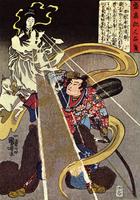
A man confronted with an apparition of the Fox goddess
Utagawa Kuniyoshi
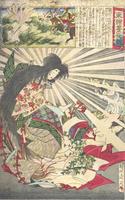
Nine tailed fox Tamamo no Mae, under her beautiful human form (down)
Utagawa Kuniyoshi
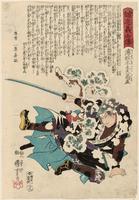
Uramatsu Handayû Takanao
Utagawa Kuniyoshi
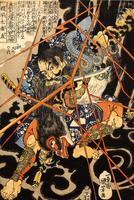
Li Hayata Hironao grappling with the monster
Utagawa Kuniyoshi
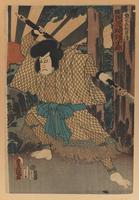
The Kabuki Actor Kawaharazaki Gonjuro as Kagekiyo
Utagawa Kunisada
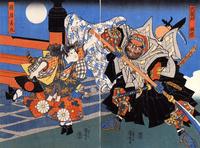
Uchiwakamaru fighting Benkei on Gojo bridge
Utagawa Kuniyoshi
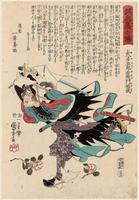
Yata Gorôemon Suketake
Utagawa Kuniyoshi
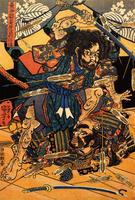
Hasebe Nobutsura during the taira attack on the takakura palace
Utagawa Kuniyoshi
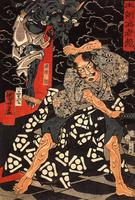
Watanabe Tsuna fighting the demon at the Rashomon
Utagawa Kuniyoshi
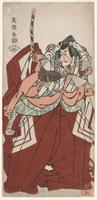
Kabuki Actor Ichikawa Ebizō I as Gongorō Kagemasa
Tōshūsai Sharaku
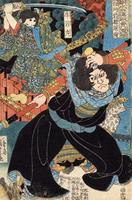
Eight Hundred Heroes of Our Country
Utagawa Kuniyoshi
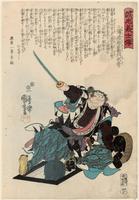
Miura Jirôemon Kanetsune
Utagawa Kuniyoshi
Kanadehon Chūshingura
Utagawa Kunisada
Minamoto Yorimitsu also known as Raiko
Utagawa Kuniyoshi
Miyamoto Musashi, Edo period
Utagawa Kuniyoshi
Otsu-e Paintings Coming Alive Triptych
Utagawa Kuniyoshi
Samurai and the conquered
Utagawa Kuniyoshi
Surprised Man on a Verandah
Utagawa Sadatora