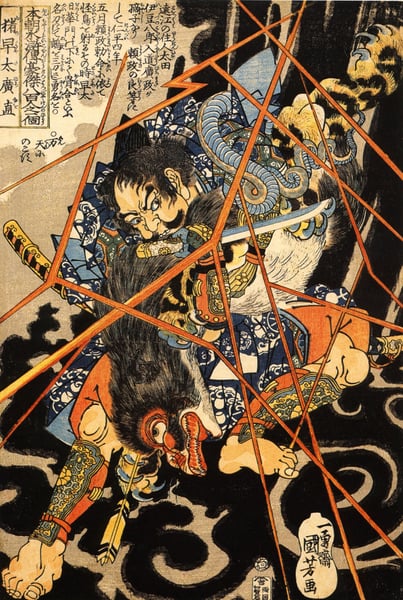
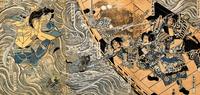
Li Hayata Hironao grappling with the monster
Expert analysis of Utagawa Kuniyoshi’s Li Hayata Hironao grappling with the monster
Style: Ukiyo-e · Genre: mythological painting
Expert Analysis of "Li Hayata Hironao grappling with the monster" by Utagawa Kuniyoshi
This artwork is a masterful example of Ukiyo-e in the mythological painting genre, created by Utagawa Kuniyoshi, one of the last great masters of the floating world tradition. Its significance lies in how it exemplifies Kuniyoshi’s revolutionary approach to the warrior-hero motif and his enduring influence on Japanese visual culture, particularly through his dramatic, muscular depictions of supernatural conflict.
Kuniyoshi was celebrated for his musha-e (warrior prints), but he elevated the genre by injecting it with a visceral dynamism borrowed from Western perspective and chiaroscuro, blended with classical Japanese legend. In this print, the hero Li Hayata Hironao (often a variant of the Chinese and Japanese folk hero Li Kui or a related martial figure) is shown in direct, physical combat with a monster—typically a scale-covered, clawed demon or oni. The composition is tight and explosive: the hero’s body twists with coiled strength, his hands locked on the creature’s limbs or jaws, while the monster recoils or writhes. This close-quarters grappling is a signature Kuniyoshi device, emphasizing raw human courage over mere weaponry.
Within the Ukiyo-e style, this work is significant for its innovative use of line and texture. Kuniyoshi’s hatched lines suggest muscle strain and the monster’s rough hide, while the bold outlines of the figures create a silhouette of struggle that is both readable and shocking. The bold color palette—often deep indigos, reds, and flesh tones—enhances the supernatural atmosphere. This print also reveals Kuniyoshi’s deep knowledge of Chinese martial legends and Japanese folklore, blending them into a single, unified image of virtue triumphing over chaos.
Why it is important: This print directly influenced the modern aesthetic of Japanese tattoo art (irezumi). Kuniyoshi’s depictions of heroic figures grappling with monsters became templates for full-body tattoo designs, establishing the visual language of strength, myth, and endurance still seen today. It also represents a high point of the late Ukiyo-e period, where the genre absorbed foreign techniques while doubling down on native narrative drama. "Li Hayata Hironao grappling with the monster" is not merely a mythological painting; it is a kinetic, almost cinematic snapshot of mortal will against the supernatural, executed with a bravura that helped secure Kuniyoshi’s reputation as the “master of the monstrous” in Ukiyo-e art.
Visually similar
20 works with related composition and palette
Hasebe Nobutsura during the taira attack on the takakura palace
Utagawa Kuniyoshi
Father and Son Members of the Forty Seven Rônin from Chûshingura
Utagawa Kunisada
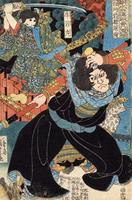
Eight Hundred Heroes of Our Country
Utagawa Kuniyoshi
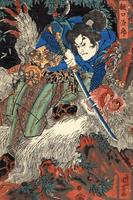
Suikoden Series
Utagawa Kuniyoshi
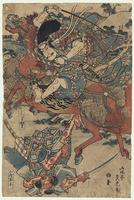
Oguri Hangan Sukeshige and Yamasaki
Utagawa Sadatora
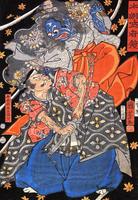
Taira Koresshige attacked by a demon
Utagawa Kuniyoshi
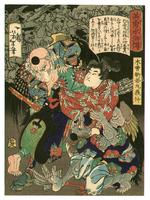
Grab Tengu Nose
Tsukioka Yoshitoshi
Heroes of china and Japan
Utagawa Kuniyoshi
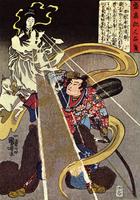
A man confronted with an apparition of the Fox goddess
Utagawa Kuniyoshi
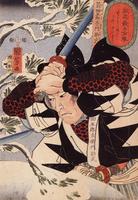
Tominomori
Utagawa Kuniyoshi
Taira Tomomori and a sea dragon
Utagawa Kuniyoshi
Vesper bell at Todaiji
Utagawa Kuniyoshi
Amakasu Omi no Kami
Utagawa Kuniyoshi
Watanabe Tsuna fighting the demon at the Rashomon
Utagawa Kuniyoshi
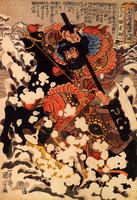
Kyusenpo Sacucho charging throught the snow on a black stallion
Utagawa Kuniyoshi
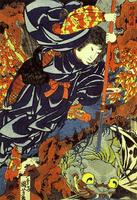
Kamigashihime stabbing a giant spider
Utagawa Kuniyoshi
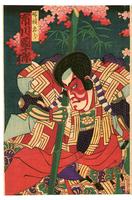
Beauty, Ghost and Hero
Toyohara Chikanobu
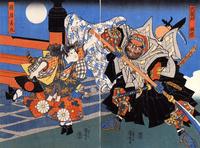
Uchiwakamaru fighting Benkei on Gojo bridge
Utagawa Kuniyoshi
The ghost of Taira Tomomori
Utagawa Kuniyoshi
Yata Gorôemon Suketake
Utagawa Kuniyoshi