Expert analysis of Max Ernst’s Crucifixion
Style: Expressionism · Genre: symbolic painting
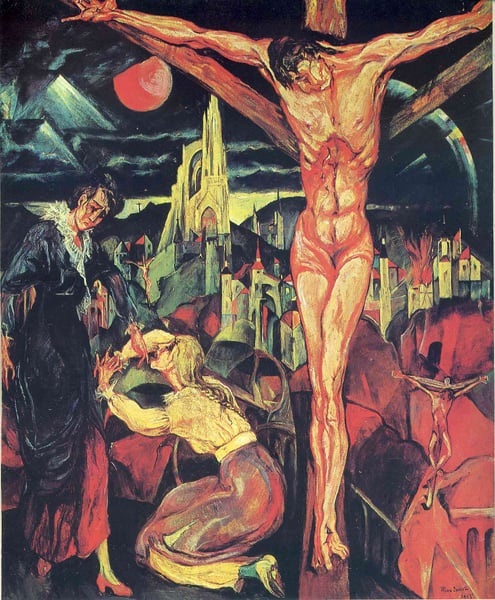
Max Ernst’s "Crucifixion" stands as a pivotal early work that bridges his formative Expressionist tendencies with the symbolic, psychological depth that would define his later Surrealist breakthroughs. Created during his Early works period, the painting reimagines a traditional religious subject through an Expressionist lens—emphasizing raw emotion, distorted forms, and stark contrasts over narrative fidelity.
What makes this piece significant is its radical departure from conventional Crucifixion iconography. Rather than focusing on Christ’s suffering or redemptive sacrifice, Ernst uses the motif as a vehicle for existential anguish and societal critique, likely informed by the trauma of World War I. The symbolic painting genre here becomes a coded language: the cross may represent not salvation but a fractured world, while the figure’s exaggerated, almost monstrous features evoke the horror and alienation felt by many artists of the era.
Within the Expressionist style, Ernst’s ”Crucifixion” demonstrates how religious imagery could be secularized to express personal and collective anxiety. The work’s bold, often jagged brushwork and unnerving color palette reflect the movement’s core goal—communicating inner experience over outer reality. As an early piece, it foreshadows Ernst’s later experiments with collage and automatism, showing that even in his initial phase, he was already subverting tradition to probe the unconscious. This makes ”Crucifixion” a crucial artifact for understanding how Expressionism paved the way for Surrealism’s deeper explorations of the psyche.
Visually similar
20 works with related composition and palette
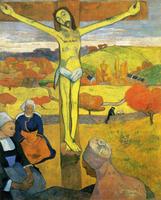
Yellow Christ
Paul Gauguin
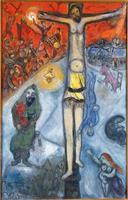
Resurrection
Marc Chagall
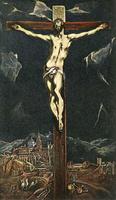
Christ in Agony on the Cross
El Greco
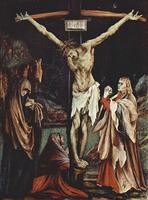
The Small Crucifixion
Matthias Grünewald
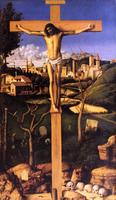
The Crucifixion
Giovanni Bellini
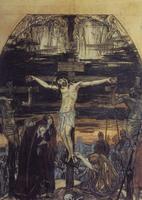
Crucifixion
Viktor Vasnetsov
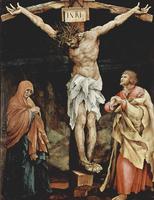
The Crucifixion
Matthias Grünewald
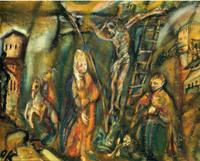
Crucifixion (Golgotha)
Oskar Kokoschka
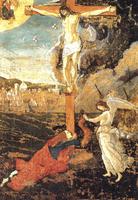
Crucifixion
Sandro Botticelli
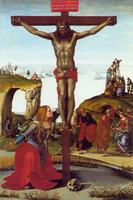
The Crucifixion with St. Mary Magdalen
Luca Signorelli
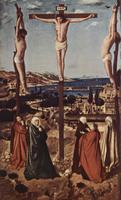
Crucifixion
Antonello da Messina
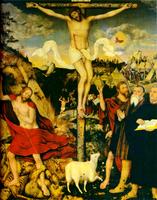
Christ as Savior with Martin Luther
Lucas Cranach the Elder
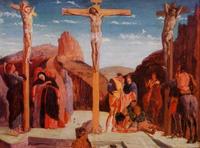
The Crucifixion (after Mantegna)
Edgar Degas
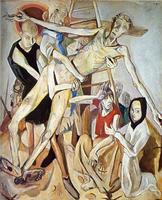
The Descent from the Cross
Max Beckmann
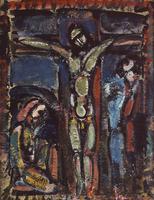
Crucifixion
Georges Rouault
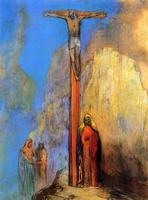
Calvary
Odilon Redon
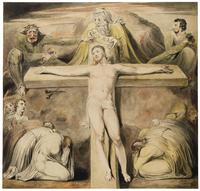
Christ Nailed to the Cross The Third Hour
William Blake
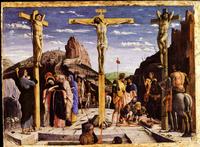
Calvary, central predella panel from the St. Zeno of Verona altarpiece
Andrea Mantegna
Crucifixion
Quentin Matsys
Crucifixion
Carlo Crivelli