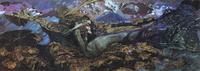
Analysis of Marlene (Mother and Son) by Max Ernst
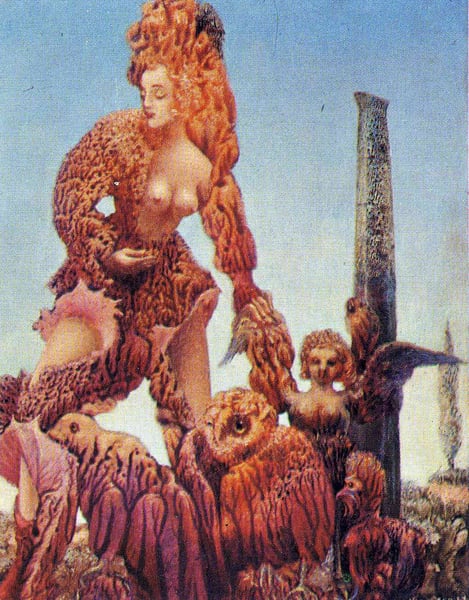
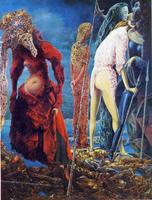
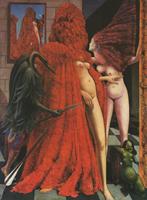
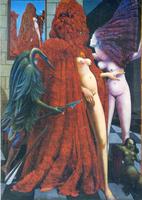
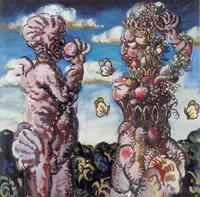
As a symbolic painting from Max Ernst’s First French period (1922–1939), this work exemplifies the Surrealist ambition to unlock the unconscious through irrational, dreamlike imagery. Ernst, a pioneer of the movement, often used collage, frottage, and dislocation to create psychologically charged scenes. Here, the title “Marlene” likely alludes to the iconic actress Marlene Dietrich, superimposing a modern, cinematic muse onto the timeless archetype of mother and child—a classic Madonna-and-Child motif radically transformed by Surrealist logic.
The painting’s significance lies in its unsettling fusion of the familiar and the strange. Typical of Ernst’s symbolic vocabulary, the figures probably appear in a state of metamorphosis, with organic and mechanical elements intertwined, suggesting the Freudian entanglement of maternal love, desire, and repressed memory. The First French period was when Ernst fully absorbed the techniques of automatism and the uncanny; Marlene would therefore disrupt traditional representation, inviting viewers to read the image as a hieroglyph of the psyche. The mother-son relationship—a central theme in Surrealist explorations of the Oedipal complex—becomes a surrealist riddle, where identity is fluid and meaning emerges from the collision of disparate realities. This work stands as a prime example of how Ernst used symbolic painting to blur the boundaries between dream and waking life, making the personal mythic and the mythic deeply personal.