
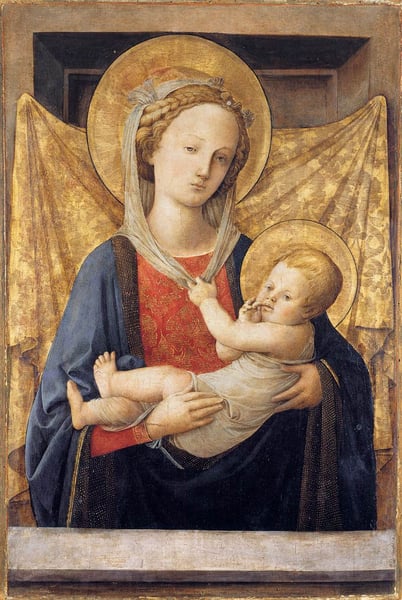
Analisi esperta di Madonna and Child di Filippo Lippi
Stile: Early Renaissance · Genere: religious painting
Expert Analysis: Filippo Lippi’s Madonna and Child (c. 1450–1465)
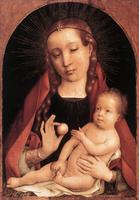
As an exemplar of Early Renaissance religious painting, Filippo Lippi’s Madonna and Child radiates the period’s revolutionary shift from the stiff, hieratic Byzantine tradition toward a more human, emotionally accessible sacred imagery. Lippi, a Carmelite friar known for infusing spiritual subjects with earthly tenderness, achieves significance here through three key innovations:
1. Intimate Humanism
Unlike the distant, enthroned Madonnas of the preceding Gothic era, Lippi presents the Virgin and Child as a relatable mother-and-infant pair. The Virgin’s downcast eyes, gentle smile, and tender grasp of the Christ Child—who reaches toward her with playful, childlike curiosity—dissolve the barrier between divine and mundane. This psychological intimacy, grounded in Lippi’s own experiences (he fathered a son with a nun, a scandal that ironically deepened his empathy), makes the sacred feel familiarly warm.
2. Secularized Setting and Symbolism
Lippi places the figures in a domestic interior with a window opening onto a lush, idealized landscape—a trademark of Early Renaissance naturalism. The landscape’s winding river and distant hills echo Flemish influence but serve a symbolic purpose: the paradisiacal garden recalls the hortus conclusus (enclosed garden) of Marian purity. Yet Lippi’s careful handling of linear perspective (a mathematical system newly revived by Brunelleschi) anchors the scene in credible space, bridging the heavenly and the terrestrial.
3. Softened Chiaroscuro and Color
Lippi’s modeling of flesh tones is supple and luminous, achieved through delicate gradations of light and shadow (chiaroscuro). The Virgin’s blue mantle, rich with lapis lazuli, and the gold halos (still present but subdued) retain medieval iconography, while the volumetric, rounded forms—a debt to Masaccio—give the bodies a palpable weight. Lippi, however, softens Masaccio’s stark drama with a lyrical, almost silvery palette and delicate contours, creating a serene, lyrical elegance that would influence later painters like Botticelli (his student).
Significance in the Early Renaissance
Lippi’s Madonna and Child stands as a pivotal synthesis: it preserves the devotional function of a religious panel yet rejects Gothic flatness in favor of Renaissance naturalism, perspective, and emotional truth. By humanizing the divine without trivializing it, Lippi expanded the possibilities of sacred art, making the holy accessible through beauty and affection. This work, with its seamless blend of earthly grace and spiritual gravity, encapsulates the Early Renaissance’s core achievement—the rediscovery of humanity as a lens for the transcendent.
Museum / Gallery
Visivamente simili
20 opere con composizione e palette affini
Madonna and Child
Giovanni Bellini
Virgin and Child with Donor
Antoniazzo Romano
The Virgin and the Child
Sandro Botticelli
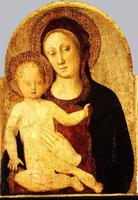
Madonna and Child
Jacopo Bellini
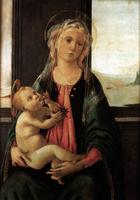
Madonna del Mare
Sandro Botticelli
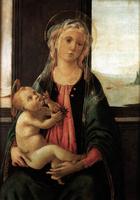
Madonna of the Sea
Sandro Botticelli
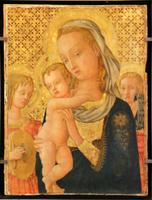
La Vierge Et L' Enfant
Lo Scheggia
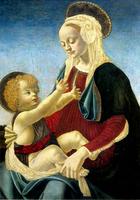
Madonna and Child
Andrea del Verrocchio
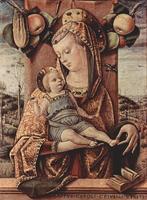
Madonna
Carlo Crivelli
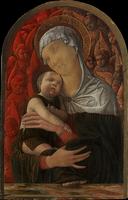
Madonna and Child with Seraphim and Cherubim
Andrea Mantegna
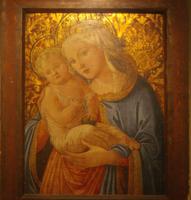
Madonna and Child
Filippo Lippi
Madonna Col Bambino
Antoniazzo Romano
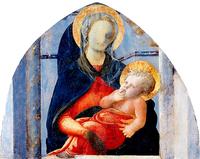
Madonna and Child
Filippo Lippi
Madonna and Child (Maria Lactans)
Ambrogio Bergognone
The Madonna and Child with the Infant Saint John the Baptist
Sandro Botticelli
Madonna and Child
Andrea del Verrocchio
Madonna
Domenico Ghirlandaio
Madonna with Child
Giovanni Bellini
Virgin and Child with An Angel
Francesco del Cossa
Virgin and Child
Jan Provoost