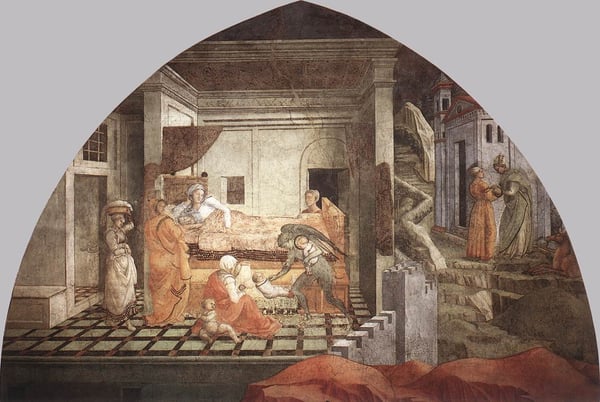
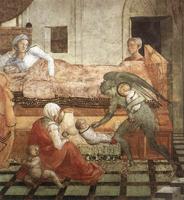
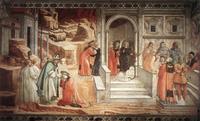
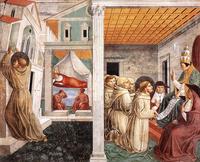
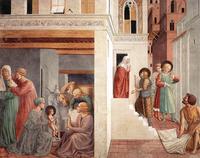
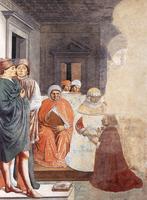
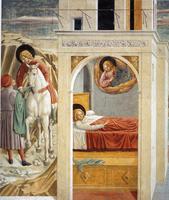
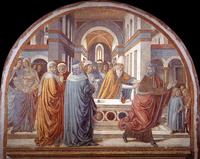
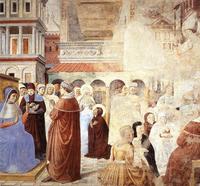
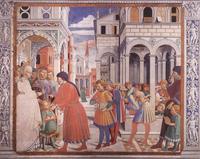
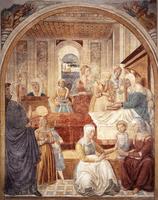
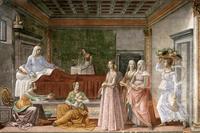
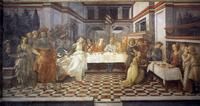
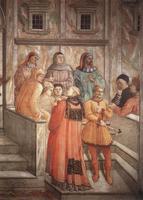
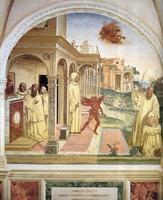
The significance of Filippo Lippi's "The Birth and Infancy of St. Stephen" within the Early Renaissance period lies in how it exemplifies the era's shift toward naturalism and humanized religious storytelling while still serving its function as a religious painting. Lippi, a Carmelite friar and a pioneering figure of the Florentine Early Renaissance, was known for infusing sacred narratives with intimate, everyday details. In this work, the focus on the saint's birth and infancy—a domestic, human moment—reflects the period’s growing interest in portraying biblical figures as relatable beings, rather than remote, hieratic icons. The composition likely balances sacred symbolism with a lively, observational clarity, making it a crucial example of how Early Renaissance artists transformed devotional art into a bridge between the divine and the human.