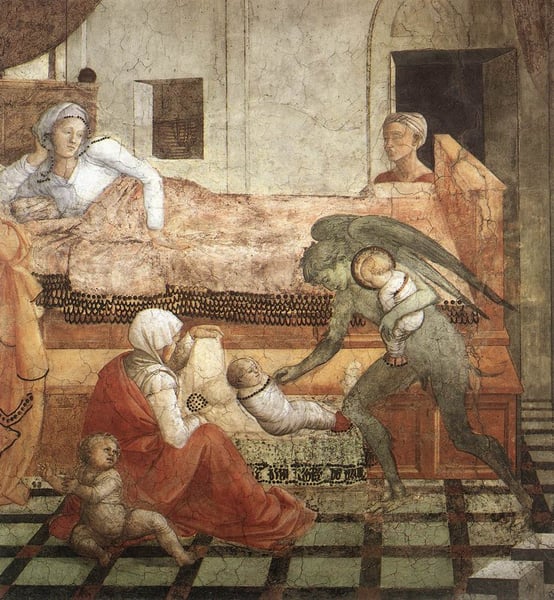
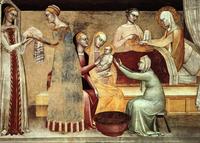
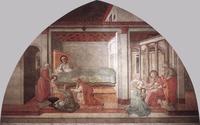
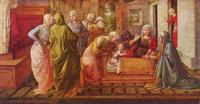
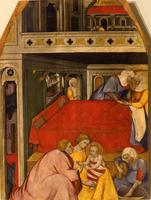
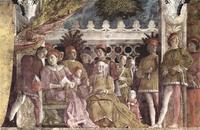
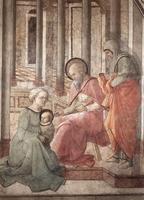
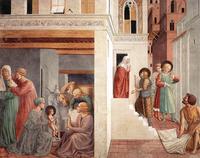
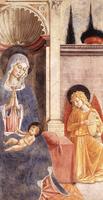
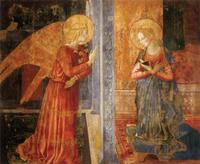
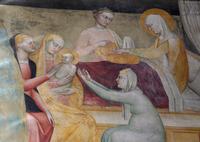
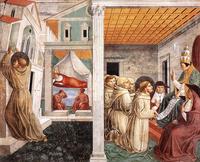
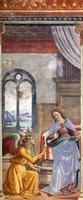
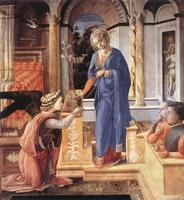
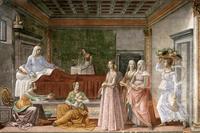
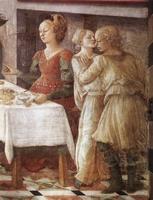
This detail from Filippo Lippi’s The Birth and Infancy of St. Stephen is significant as a quintessential example of Early Renaissance religious painting. The work exemplifies the period’s shift from the flat, iconic forms of the preceding Gothic style toward greater naturalism, spatial coherence, and human emotion—all while remaining firmly within a devotional context.
As a religious narrative, the detail focuses on the intimate, domestic aspects of a saint’s early life, a hallmark of Early Renaissance humanism. Lippi’s composition likely emphasizes clear, readable storytelling through delicate figural placement and gentle interactions, making sacred history accessible and emotionally resonant for contemporary viewers. The use of color, light, and draftsmanship typical of this period would lend the scene a sense of tangible presence, grounding the miraculous in everyday reality.
Within the broader Early Renaissance, Lippi’s work is important for blending the spiritual with the earthly, and this detail—by isolating a moment of infancy—underscores the movement’s deep interest in the natural world and human experience as vehicles for divine meaning.