Description
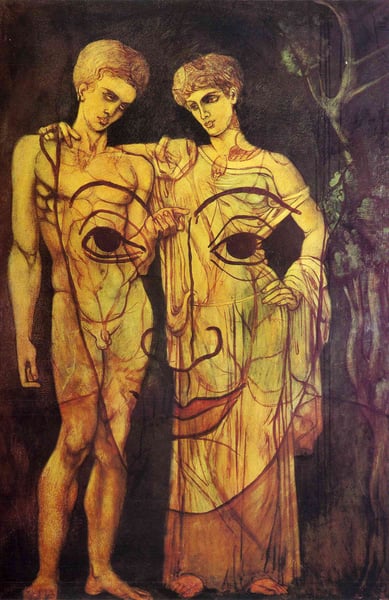
Style: Surrealism · Genre: religious painting
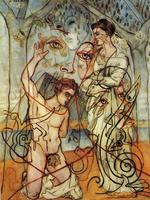
This enigmatic painting is part of Picabia's Transparency series (c.1928-31), whose dream-like quality derives from layers of imagery that faintly suggest strange narratives. Though the title of this painting is Adam et Eve (Adam and Eve), it was inspired by Orestes and Electra, a classical Greek sculpture in the Museum of Naples, which portrays Electra and her brother considering revenge on their mother and stepfather for the murder of their father, Agamemnon. Classical subjects such as this were popular in the interwar period, yet most artists attempted to give new life to Classicism by adapting it to modern times. Picabia refuses this temptation, instead leaving the statue enigmatically layered with a smiling face and leaving us with a mystery. This clash of imagery from apparently different sources would be a major inspiration for later artists such as Sigmar Polke.
Museum / Gallery
Visually similar
20 works with related composition and palette
Clytemnestra hesitates before killing the-sleeping agamemnon
Pierre-Narcisse Guerin
Illustration to the Iliad
John Flaxman
Έαρ έδε
Alekos Kontopoulos
Adam and Eve
Albrecht Durer
Toilette De Venus
Jacques Réattu
Craccae
Francis Picabia
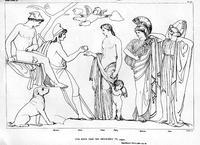
The Judgment of Paris. Illustration to the Iliad
John Flaxman
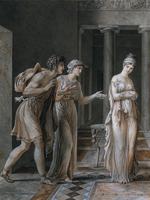
The Meeting of Orestes and Hermione
Anne-Louis Girodet
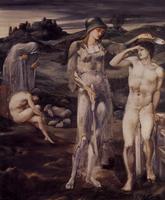
The Calling of Perseus
Edward Burne-Jones
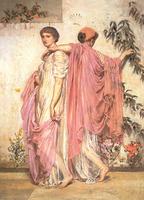
Apricots
Albert Joseph Moore
The Sacred Wood Cherished by the Arts and the Muses (detail)
Pierre Puvis de Chavannes
Illustration to Milton`s Paradise Lost
William Blake
Archangel Raphael with Adam and Eve
William Blake
Flora Farnese
Giovanni Battista Piranesi
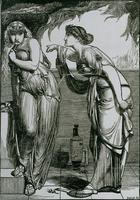
Helen and Cassandra
Frederick Sandys
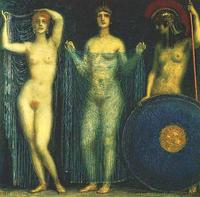
The three goddesses Hera, Aphrodite, Athena
Franz Stuck
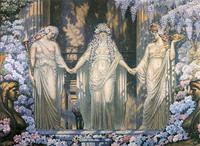
The Women of Eleusis
Jean Delville
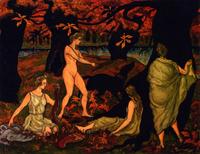
Untitled
Paul Ranson
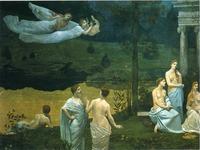
The Sacred Wood Cherished by the Arts and the Muses (detail)
Pierre Puvis de Chavannes
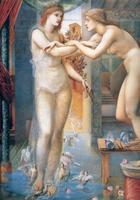
Pygmalion and the Image III: The Godhead Fires
Edward Burne-Jones