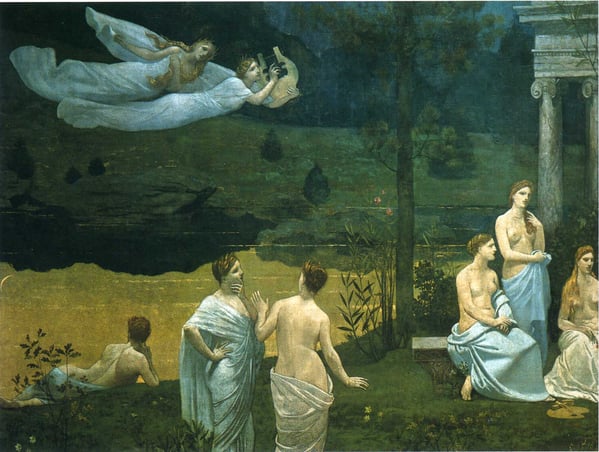
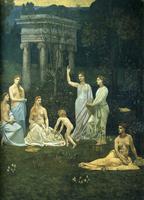
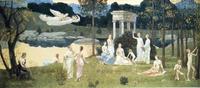
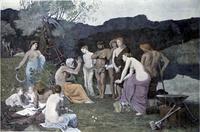
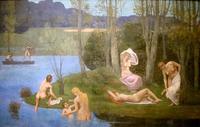
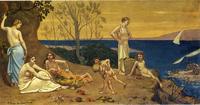
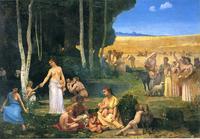
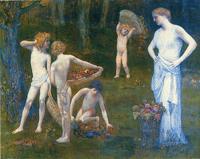
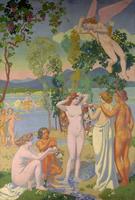
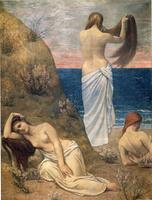
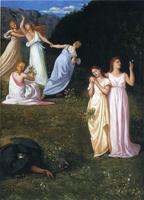
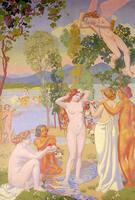
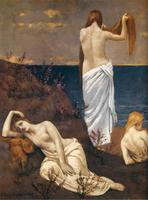
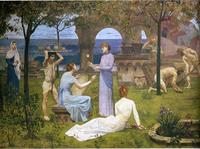
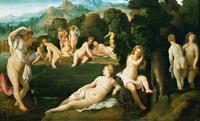
In this detail from The Sacred Wood Cherished by the Arts and the Muses, Pierre Puvis de Chavannes exemplifies the core tenets of Symbolism: a deliberate move away from naturalistic representation toward an idealized, evocative realm. The painting’s significance lies in its quiet, monumental stillness—a hallmark of Puvis’s mature style. Figures are arranged with a frieze-like composure, their poses both classical and ethereal, embodying allegorical concepts of inspiration and artistic legacy.
As a Symbolist work, the painting rejects narrative action in favor of a meditative atmosphere. The “sacred wood” functions as a liminal space where the arts (personified by Muses) are both cherished and generative. Puvis’s muted palette and flattened perspectives heighten this sense of an eternal, dreamlike present. This approach directly influenced later modernists—Matisse and Picasso among them—who admired how Puvis simplified form to convey poetic meaning. The detail’s emphasis on interwoven figures and landscape underscores the Symbolist quest for harmony between nature and the human spirit, making the work a touchstone for the movement’s preoccupation with myth, memory, and transcendence.