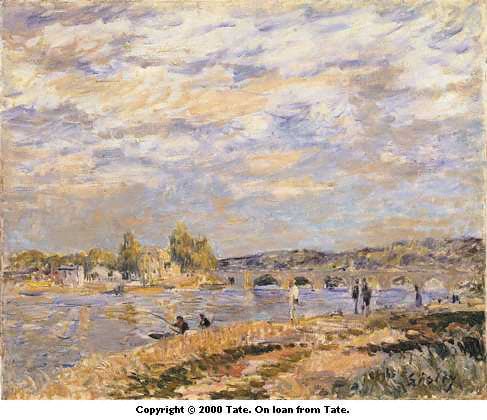
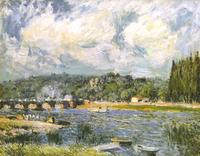
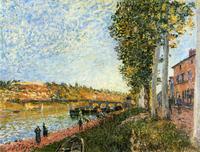
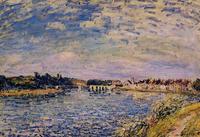
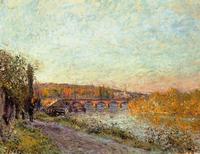
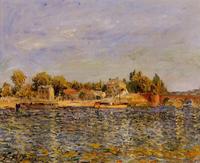
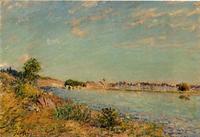
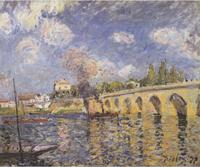
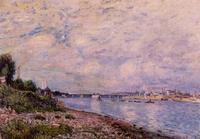
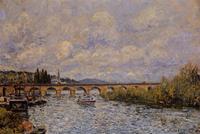
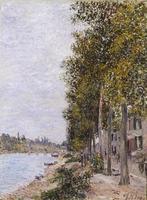
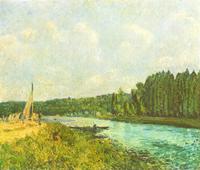
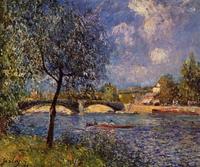
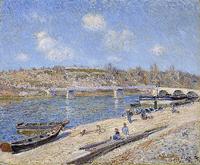
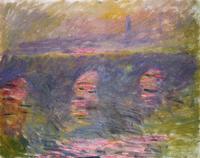
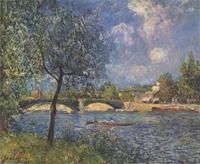
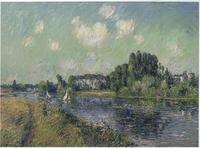
This work, Bridge at Serves by Alfred Sisley, exemplifies the core tenets of Impressionism through its dedicated focus on landscape as a vehicle for transient light and atmosphere. As an Impressionist landscape, its significance lies in Sisley’s unwavering commitment to painting en plein air, capturing the subtle shifts of natural light on a seemingly ordinary subject—a bridge over water. The composition likely employs broken, rapid brushwork to render the reflections on the river’s surface and the dappled light filtering through trees, dissolving solid forms into vibrant color patches. Sisley, often considered the most purely Impressionist of the group for his exclusive devotion to landscape, uses this scene to emphasize mood over detail, transforming a mundane structure into a shimmering meditation on time and weather. The artwork stands as a testament to how Impressionism found profound depth in everyday scenes, prioritizing sensory experience over narrative and celebrating the fleeting beauty of the natural world.