
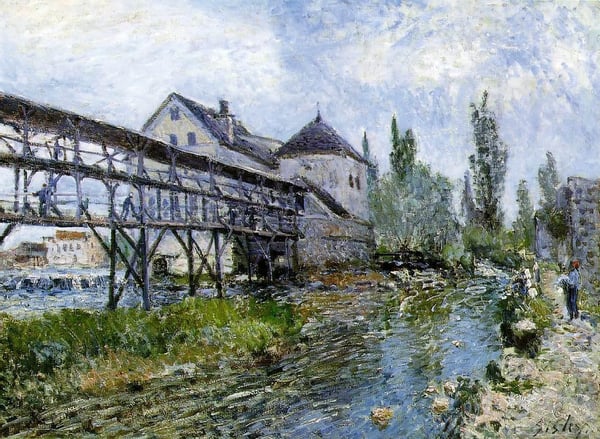
Alfred Sisley の Provencher s Mill at Moret の専門的な分析
スタイル:Impressionism · ジャンル:landscape
Expert Analysis: "Provencher’s Mill at Moret" by Alfred Sisley
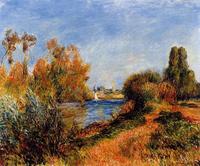
Alfred Sisley’s Provencher’s Mill at Moret exemplifies the core tenets of Impressionism through its dedicated treatment of a landscape subject. As a British-born artist who spent most of his life in France, Sisley was among the purest practitioners of the Impressionist ethos, focusing almost exclusively on the transient effects of light, atmosphere, and weather.
Significance within Impressionism:
-
Mastery of Plein Air and Atmospheric Light:
Sisley painted the mill at Moret-sur-Loing repeatedly, much as Monet painted the haystacks and Rouen Cathedral. This particular view demonstrates his commitment to capturing shifting weather and light conditions. The loose, feathery brushstrokes typical of Impressionism dissolve the mill’s solid form into a shimmer of reflected color, particularly in the water, where dabs of blue, green, and white create a vibrant, fleeting effect. This is a hallmark of the movement: the artist’s primary subject is light itself, not the mill’s architecture. -
Compositional Balance and Serenity:
Unlike some of his peers who favored dramatic urban scenes or crowded leisure activities, Sisley gravitated toward quiet, rural landscapes. Here, the mill’s sturdy vertical mass is tempered by the horizontal flow of the river and the soft interplay of sky and foliage. The result is a harmonious, meditative composition that underscores the Impressionist fascination with nature’s everyday, unheroic beauty. The emphasis on water reflections—a recurring Sisley motif—shows his skill in rendering transparency and movement, key concerns of the movement. -
Color as Structure:
Sisley often used a subtly restricted palette, where tonal harmonies (soft greens, pale blues, warm creams) replace strong contrasts. In this work, the mill’s shadowed side is not painted with black or gray but with cool violets and blues—a classic Impressionist practice of using color to describe shadow. This optical realism, based on direct observation, elevates the scene from a mere documentary view to a study of how light transforms physical forms.
Why This Work Matters:
Provencher’s Mill at Moret is significant because it distills Impressionism’s essence: a direct, sensory response to a specific place at a specific moment. Sisley, though often overshadowed by Monet and Renoir, remains the movement’s most consistent landscape specialist. This painting, with its delicate balance of structure and dissolution, naturalism and abstraction, stands as a quiet triumph of the Impressionist ambition to capture the ephemeral poetry of the visible world. It reminds us that Impressionism’s revolution was not only in technique but in choosing to see the extraordinary in the ordinary—a riverside mill under a shifting sky.
Museum / Gallery
視覚的に類似
構図やパレットが近い作品 20 件
Watermill near Moret by Alfred Sisley
Alfred Sisley
The Old Mill, The Andelys
Maxime Maufra
Canal du Loing Chemin de Halage
Alfred Sisley
Near Moret sur Loing
Alfred Sisley
The Labastide du Vert in Spring
Henri Martin
Path at Sablons
Alfred Sisley
Indian Summer at Moret Sunday Afternoon
Alfred Sisley
Near Moret
Alfred Sisley
The Loing at Moret
Alfred Sisley
Port Joie
Gustave Loiseau
The straw Rent
Alfred Sisley
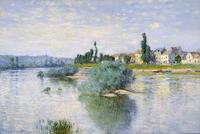
The Seine at Lavacourt
Claude Monet
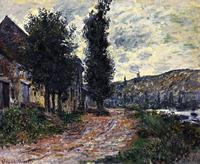
Tow Path at Lavacourt
Claude Monet
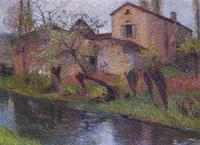
Marie Louise House
Henri Martin
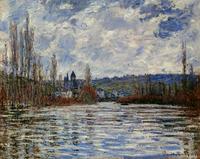
Flood of the Seine at Vetheuil
Claude Monet
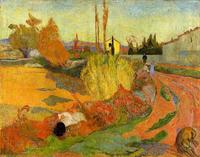
Landscape at Arles
Paul Gauguin
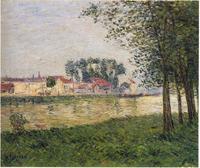
By the Oise at Parmain
Gustave Loiseau
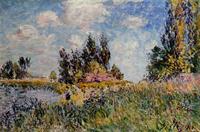
Landscape The Banks of the Loing at Saint Mammes
Alfred Sisley
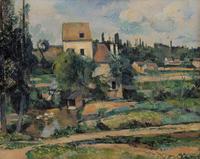
Moulin de la Couleuvre at Pontoise
Paul Cezanne
The Seine at Argenteuil
Pierre-Auguste Renoir