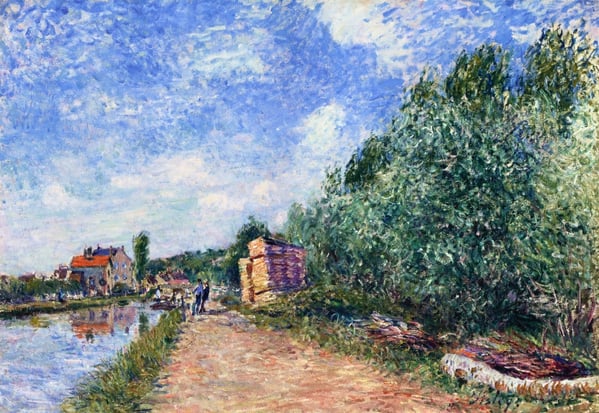
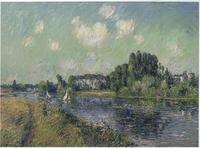
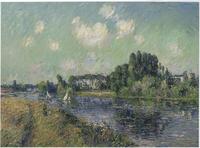
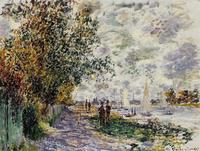
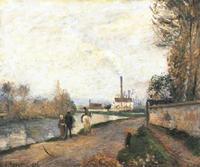
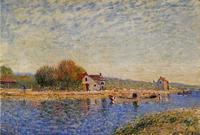
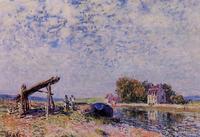
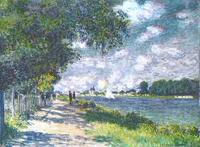
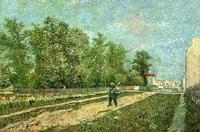
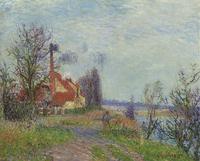
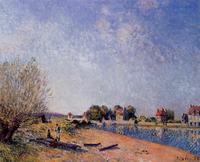
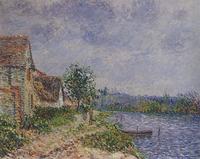
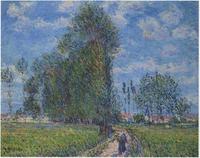
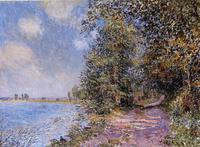
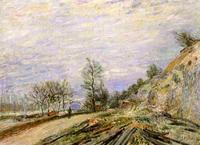
Alfred Sisley's Canal du Loing Chemin de Halage exemplifies the purest tenets of Impressionist landscape painting. Executed en plein air, the work captures the transient effects of light and atmosphere along the towpath of the Canal du Loing. Sisley's characteristic brushwork—loose, yet deliberately structured—renders the rippling water and leafy banks as interplays of broken color rather than fixed forms. The composition is significant for its subtle balance between natural and man-made elements: the towpath (chemin de halage) leads the eye into depth, while the reflections in the canal dissolve boundaries between sky, water, and land. Within Impressionism, Sisley is often considered the most faithful landscape specialist, and this painting demonstrates his lifelong dedication to capturing the quiet, lyrical moods of the French countryside. Against the more narrative or urban subjects of his peers, Sisley's Canal du Loing stands as a meditative study of atmosphere—a hallmark of his understated yet profound contribution to the movement.