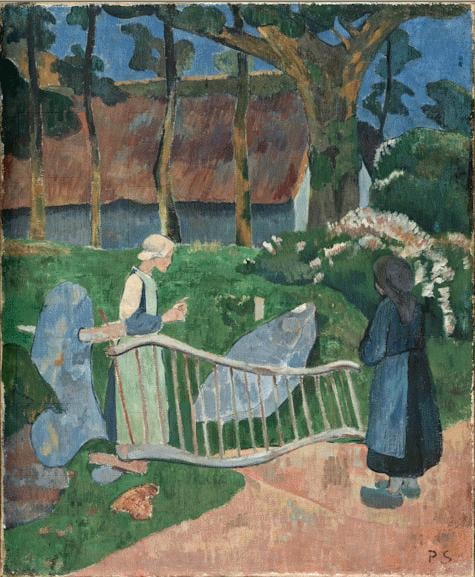
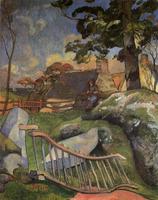
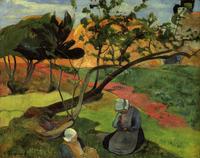
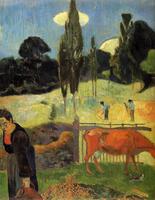
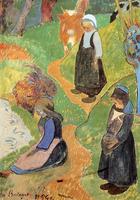
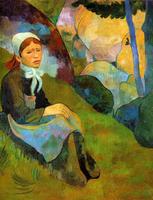
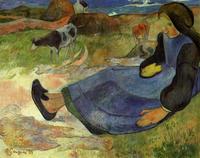
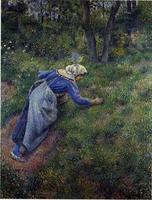
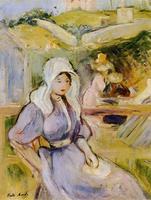
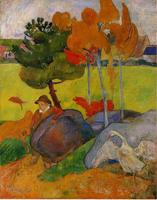
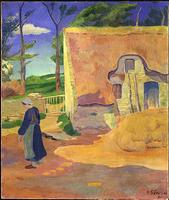
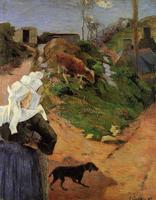
Paul Sérusier’s The flowered barrier exemplifies the core principles of Synthetism through the lens of genre painting, making it a significant work within the Post-Impressionist movement. The painting synthesizes observed reality with the artist’s subjective response, reducing a domestic or pastoral genre scene to essential forms and bold, unmodulated colors. The “barrier” itself likely serves as a compositional and symbolic device—flattening the picture plane into decorative, patterned zones that echo Synthetism’s rejection of naturalistic depth. By applying this style to everyday subject matter, Sérusier elevates the mundane into a timeless, almost emblematic image, demonstrating how Synthetism could transform genre painting into a vehicle for expressive, symbolic meaning rather than mere anecdote. This work stands as a testament to the movement’s radical simplification, in which color and contour dominate over detail, inviting the viewer to experience the scene as a purified visual harmony.