Surimono
Expertenanalyse zu Utagawa Kunisadas Surimono
Stil: Ukiyo-e · Genre: nude painting (nu)
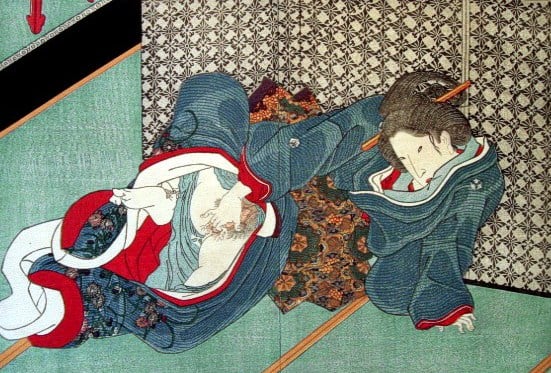
Expert Analysis: "Surimono" by Utagawa Kunisada (Ukiyo-e, Genre: Nu)
Utagawa Kunisada (1786–1865) was the most prolific and commercially successful ukiyo-e artist of the 19th century, known for his exquisite bijin-ga (pictures of beautiful women) and actor prints. However, his Surimono—a rare foray into the nude (nu) genre—stands as a fascinating outlier within both his oeuvre and the broader ukiyo-e tradition.
Context and Rarity:
In Edo-period Japan, the public display of nudity was largely taboo, and ukiyo-e prints typically depicted elaborately clothed courtesans or actors. Nude figures did appear in shunga (erotic art), but those were overtly sexualized and often placed in humorous or narrative contexts. Kunisada’s Surimono, by contrast, is a surimono—a privately commissioned, deluxe print intended for a select audience of poetry circles or patrons. This format allowed for greater experimentation, freed from the censorship or commercial pressures of mass-produced prints. The work’s significance lies in its rare, almost Western-inspired treatment of the nude as a subject of aesthetic contemplation rather than explicit eroticism.
Stylistic Significance:
Kunisada adapts the elegant, flowing lines of ukiyo-e to the human form, capturing the soft curves and naturalistic proportions of a female figure. Unlike the exaggerated poses or patterned robes typical of his bijin-ga, this nude is rendered with a restrained sensuality—the body is partially turned, the gaze averted, and the overall composition recalls the classical venus pudica pose but filtered through a Japanese sensitivity for negative space and asymmetrical balance. The use of muted, harmonious colors and delicate outlines exemplifies the craftsmanship of surimono, often featuring metallic pigments or embossing.
Art-Historical Impact:
This work challenges the conventional narrative that ukiyo-e avoided the nude. While earlier masters like Hokusai or Utamaro included nudity in shunga or book illustrations, Kunisada’s Surimono elevates the nude to a standalone, fine-art object. It reveals the cross-cultural currents of the late Edo period, when imported European prints (often classical nudes via Dutch trade) began influencing Japanese artists. Kunisada’s willingness to experiment within the private surimono format shows that ukiyo-e was not a static tradition but a dynamic field capable of absorbing new ideas while maintaining its own visual language.
In summary, Surimono is significant as a demonstration of Kunisada’s technical mastery, a rare artistic statement on the nude within ukiyo-e, and a testament to the private, innovative spaces that surimono offered in a period of strict public censorship.
Visuell ähnlich
20 Werke mit ähnlicher Komposition und Farbpalette
The Hour of the Dragon
Kitagawa Utamaro
Shunga Scroll
Keisai Eisen
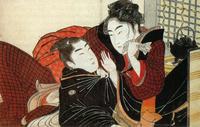
A scene from the 'Poem of the Pillow'
Kitagawa Utamaro
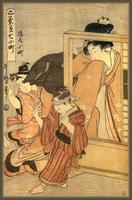
A Woman Watches Two Children
Kitagawa Utamaro
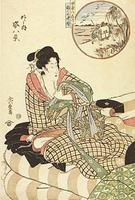
In circle, figure piece, (Outdoor)
Hiroshige
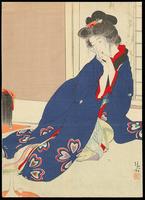
Scarlet Peach
Kiyokata Kaburagi
Before the Window
Utagawa Kunisada
Playing Cards
Utagawa Kunisada
Four seasons: Spring, Summer, Autumn, Winter
Utagawa Kunisada
Flowers of Edo (Right)
Utagawa Kuniyoshi
Love on the Kamo River
Keisai Eisen
Beneath the Stairs
Utagawa Kunisada
Kabuki Actors Sawamura Sōjūrō III as Nagoya Sanza, and Segawa Kikunojō Iii as the Courtesan Katsuragi
Tōshūsai Sharaku
The Letter
Utagawa Kunisada
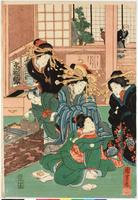
Flowers of Edo (Center)
Utagawa Kuniyoshi
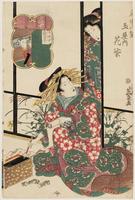
Hanamurasaki of the Tamaya, from the series Eight Views of the Pleasure Quarters (Kuruwa hakkei)
Keisai Eisen
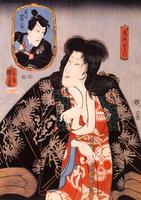
The female demond
Utagawa Kuniyoshi
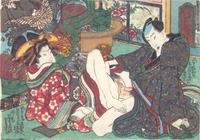
The High-ranking Courtesan
Utagawa Kunisada
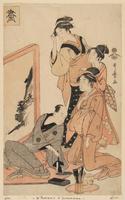
The four virtues
Kitagawa Utamaro
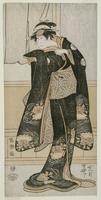
Iwai Hanshirō IV as Otoma, Daughter of Ohina from Inamuragasaki in Kamakura, actually Kikusui, the wife of Kusunoki Masashige
Tōshūsai Sharaku