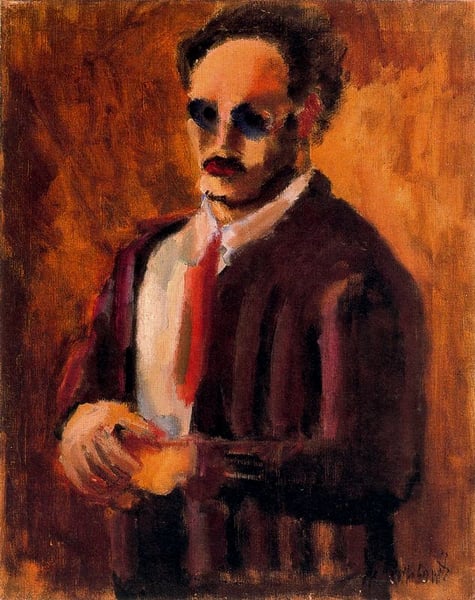
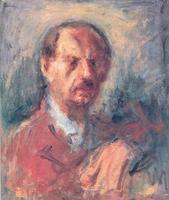
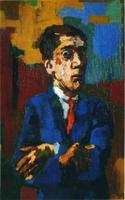
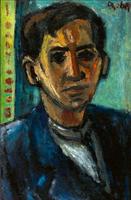
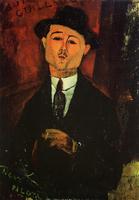
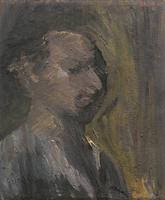
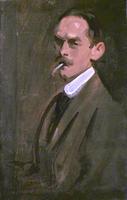
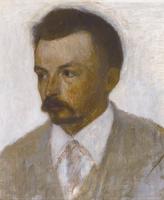
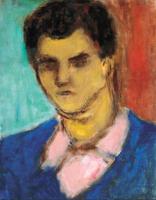
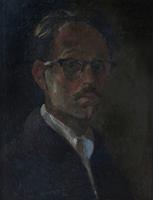
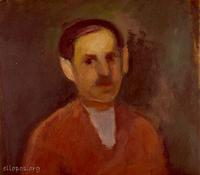
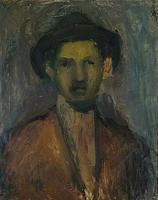
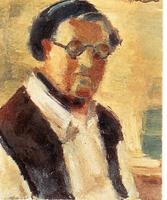
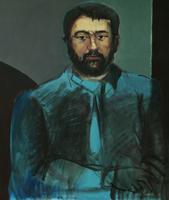
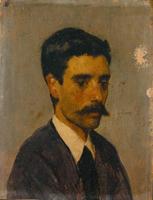
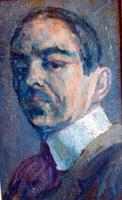
This self-portrait by Mark Rothko, executed within the Expressionist style, is significant for its concentrated focus on the artist’s subjective inner state rather than on external likeness. As a portrait, it channels the core tenets of Expressionism—distorted features, heightened emotional intensity, and a psychological atmosphere—into a direct self-examination. The work stands out because it applies Rothko’s later preoccupation with raw, emotive content to the traditional genre of self-portraiture, offering a personal, introspective document within his broader Expressionist practice. Its significance lies in how it embodies the movement’s goal of conveying universal human emotion through the very act of recording the self.