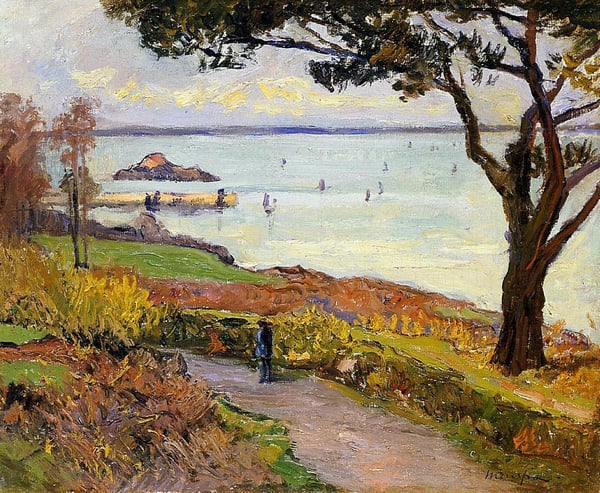
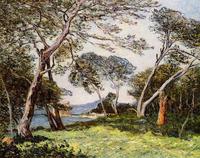
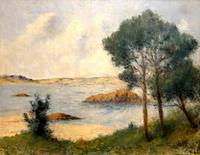
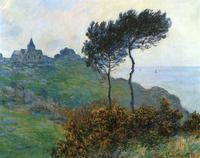
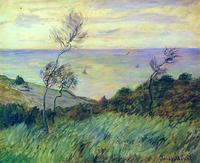
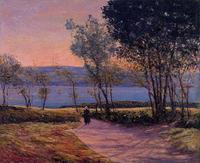
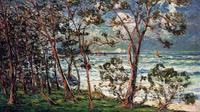
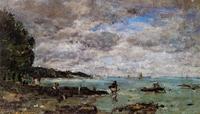
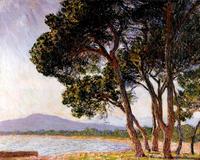
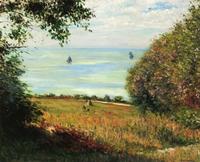
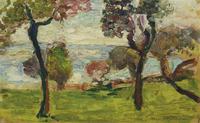
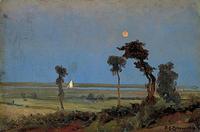
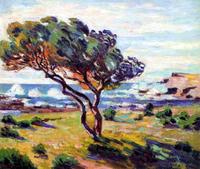
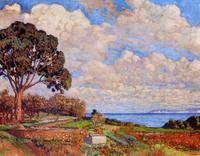
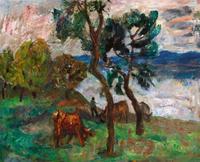
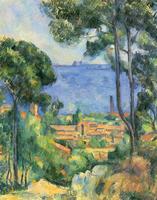
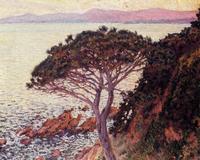
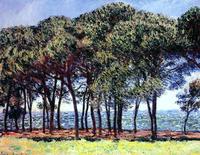
As a Post-Impressionist landscape, The Bay of Douarnenez by Maxime Maufra exemplifies the movement's departure from Impressionism's purely optical concerns toward a more structured, expressive, and emotionally resonant treatment of nature. The work’s significance lies in its synthesis of vivid color, bold composition, and a personal, almost symbolic response to the natural world—hallmarks of Post-Impressionist practice. Maufra’s treatment of the Breton coastline likely emphasizes rhythmic forms and saturated hues to convey the atmosphere and character of the site, moving beyond mere visual recording to evoke a sense of place and mood. This aligns with the broader Post-Impressionist ambition to use landscape as a vehicle for deeper expression, making the painting a representative example of how artists of this period transformed ordinary scenery into vehicles of formal and emotional innovation.