Expertenanalyse zu Maxime Maufras The Dam of a Loir Ponce
Stil: Post-Impressionism · Genre: landscape
Expert Analysis of "The Dam of a Loir Ponce" by Maxime Maufra
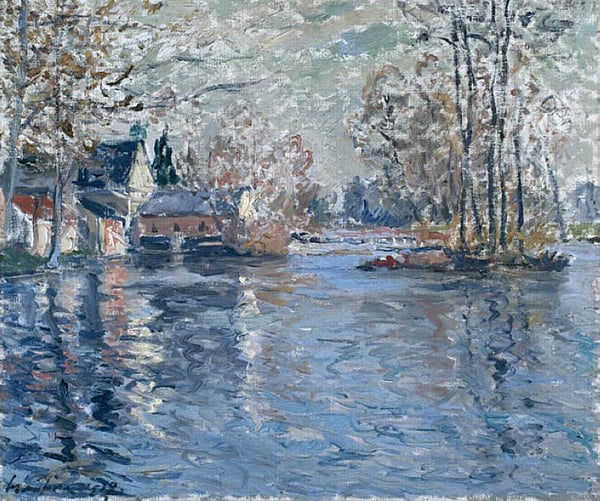
Maxime Maufra (1861–1918) was a pivotal figure in the transition from Impressionism to Post-Impressionism, and The Dam of a Loir Ponce exemplifies his mature approach to landscape painting. As a member of the Pont-Aven school, Maufra was deeply influenced by Paul Gauguin's Synthetist principles—emphasizing bold outlines, flat planes of color, and a heightened emotional response to nature—while retaining the Impressionist devotion to capturing light and atmosphere.
Stylistic Significance within Post-Impressionism
Maufra’s work here demonstrates a key Post-Impressionist concern: moving beyond mere optical recording toward a more structured, expressive representation of the natural world. The dam itself—a man-made intervention in a river landscape—provides a compelling subject for this tension. Maufra treats the water, foliage, and architectural elements not as separate entities but as interlocking patches of color and texture, unified by a rhythmic, almost decorative pattern. His brushwork is energetic yet deliberate, avoiding the broken, shimmering strokes of pure Impressionism in favor of broader, more defined marks that give the landscape a feeling of solidity and permanence.
Composition and Mood
The composition likely leads the eye along the dam’s structure, using its horizontal line to create stability, while the surrounding trees and water introduce vertical and diagonal counterpoints. Maufra’s palette—probably rich in greens, blues, and earthy ochers, with touches of warm light—reflects his fascination with the French countryside and its changing seasons. The dam becomes both a literal and metaphorical barrier: a quiet symbol of human presence harmonizing with, rather than overwhelming, nature. This balance resonates with the Post-Impressionist quest for subjective truth over literal transcription.
Placement in Maufra’s Legacy
Maufra is often celebrated for his ability to synthesize the lessons of his contemporaries—Gauguin’s symbolism, Monet’s light, and the Nabis’ decorative flatness—into a highly personal vision. The Dam of a Loir Ponce is significant because it showcases his mature style, where landscape becomes a vehicle for emotional resonance and formal innovation. It reminds us that Post-Impressionism was not a single style but a broad exploration of how paint, color, and structure could convey deeper meaning. For Maufra, that meaning lay in the quiet drama of everyday rural scenes, rendered with both lyricism and structural clarity.
This work stands as a testament to Maufra’s role in bridging the sensory immediacy of Impressionism with the symbolic and structural ambitions of early modernism, making it a valuable example of Post-Impressionist landscape painting at its most thoughtful and accomplished.
Visuell ähnlich
20 Werke mit ähnlicher Komposition und Farbpalette
High Waters at Moret sur Loing
Alfred Sisley
The Ponce Paper Factory on the Edge of the Sathe Woods
Maxime Maufra
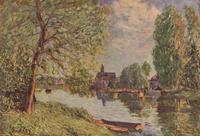
River Landscape by Moret sur Loing
Alfred Sisley
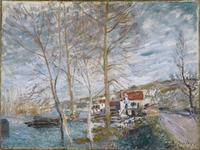
Flood at Moret
Alfred Sisley
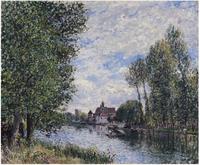
Summer in Moret
Alfred Sisley
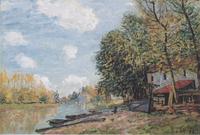
The banks of the Loing Moret
Alfred Sisley
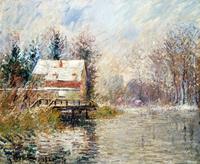
House by the Water
Gustave Loiseau
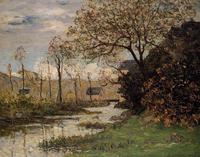
The Auray River
Maxime Maufra
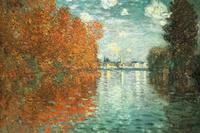
Autumn Effect at Argenteuil
Claude Monet
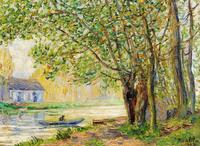
The Effect of Sun on the Banks of the Loing
Francis Picabia
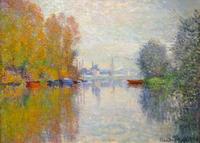
Autumn on the Seine at Argenteuil
Claude Monet
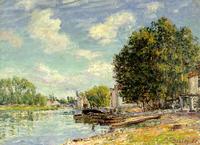
Moret Sur Loing
Alfred Sisley
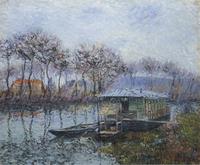
The Seine at Port Marly
Gustave Loiseau
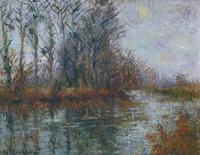
By the Eure River
Gustave Loiseau
Matrat Cottages
Alfred Sisley
By the Oise at Parmain
Gustave Loiseau
The Loing at Moret
Alfred Sisley
May Afternoon on the Loing
Alfred Sisley
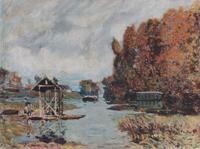
Washerwomen of Bougival
Alfred Sisley
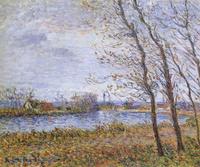
Port Pinche at the Turn of the Seine
Gustave Loiseau