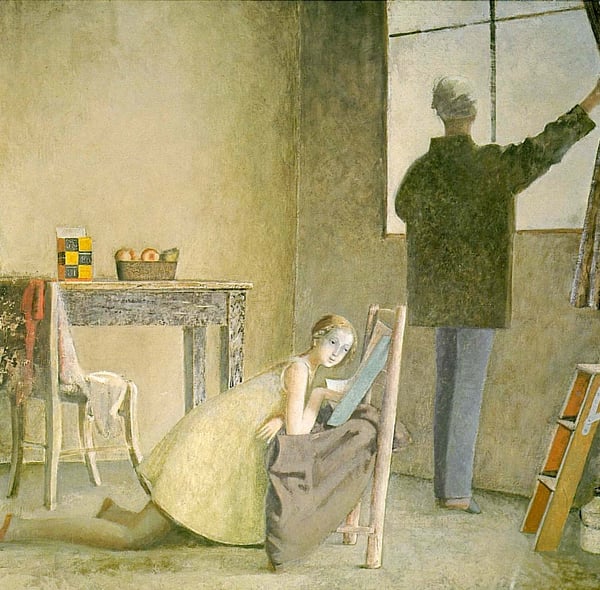
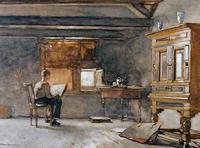
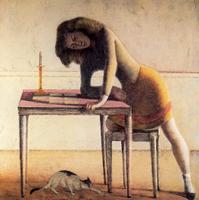
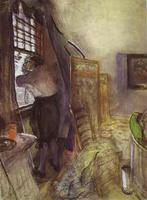
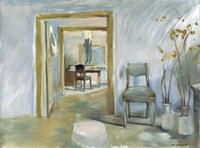
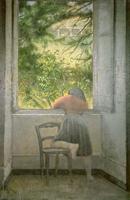
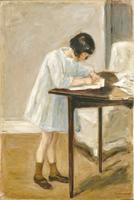
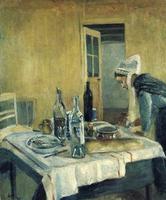
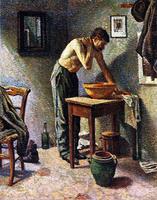
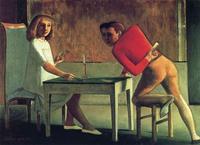
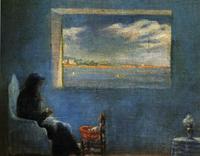
In Balthus's Painter and his Model, the artist translates the traditional genre scene of the studio into a charged expressionist tableau. The work gains significance through its subversion of the painter-and-model trope: rather than celebrating artistic creation, Balthus employs expressionist distortion—muted, earthy tones and flattened, slightly awkward spatial arrangement—to create a palpable psychological tension. The model becomes an object of both contemplation and estrangement, while the painter's presence is ambiguous. This deliberate manipulation of form and mood moves beyond simple documentation of everyday artistic life, instead probing the uneasy dynamics of looking, representation, and power that lie at the heart of the genre.