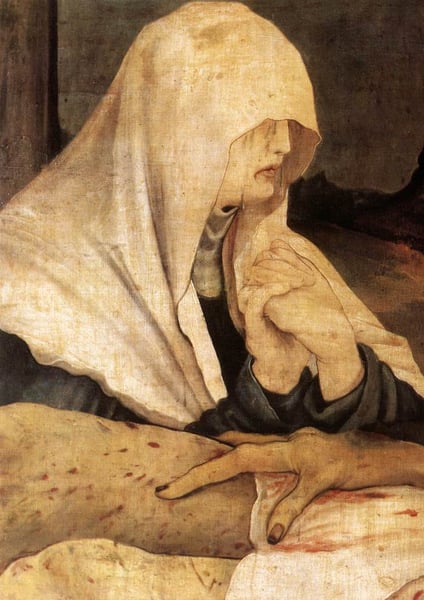
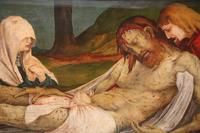
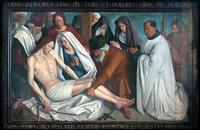
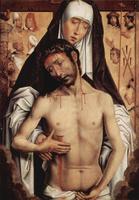
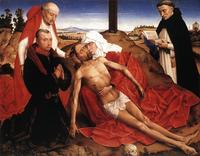
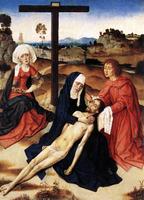
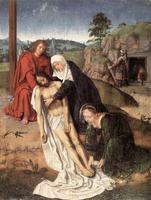
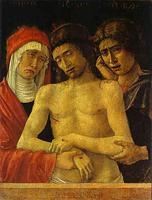
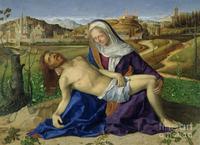
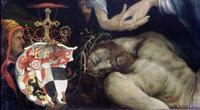
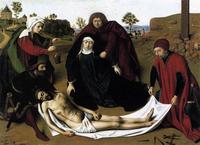
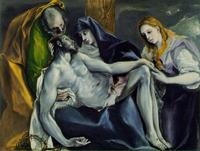
The detail from the bottom of the first view of the Isenheim Altar depicts the Entombment of Christ, a central theme of suffering and redemption. As a Northern Renaissance religious painting, Grünewald’s work is significant for its raw, visceral emotional intensity—a hallmark of his style within the period. The scene emphasizes the physicality of Christ’s corpse and the grief of the mourners, rendered with stark realism and dramatic, almost expressionist use of color and lighting. This altarpiece was created for the Monastery of St. Anthony in Isenheim, whose hospital treated victims of ergotism (St. Anthony’s fire), making the image of Christ’s afflicted body a source of solace and identification for suffering patients. The Entombment detail thus functions as both a devotional focus and a powerful therapeutic image, elevating Grünewald’s work to a unique fusion of spiritual empathy and corporeal agony within Northern Renaissance art.