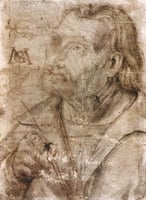
Analisi esperta di Head of a Shouting Man di Matthias Grünewald
Stile: Northern Renaissance · Genere: sketch and study
Expert Analysis: "Head of a Shouting Man" by Matthias Grünewald
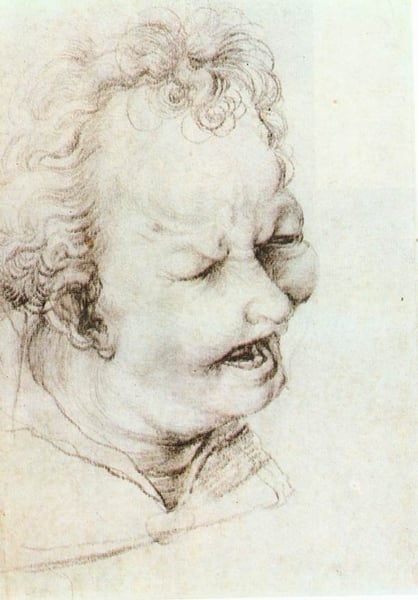
Matthias Grünewald’s Head of a Shouting Man stands as a remarkable testament to the emotional intensity and technical mastery of the Northern Renaissance. As a sketch and study, this work offers a rare glimpse into the artist’s preparatory process—a direct, unfiltered exploration of human expression that was central to the period's shift toward naturalism and psychological depth.
Significance within the Northern Renaissance:
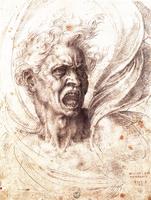
In an era when religious painting dominated, Grünewald distinguished himself through his visceral, often agonized portrayals of the human figure. This study captures a moment of raw, uncontained emotion: the open mouth, furrowed brow, and taut neck muscles convey a shout of terror, grief, or ecstasy. Unlike the more idealized, balanced figures of the Italian Renaissance, Northern artists like Grünewald embraced expressive distortion and exaggerated features to convey spiritual or emotional truth. Here, the untamed energy of the face—sketched with bold, rapid strokes—reveals the artist’s fascination with capturing fleeting, extreme states of being.
What makes it significant:
-
Emotional immediacy: The work predates and parallels the pathos of Baroque art, but within the Northern Renaissance it is exceptional. Grünewald’s Isenheim Altarpiece (c. 1512–1516) is famous for its harrowing Crucifixion; this study may be a preparatory work for a similar figure, demonstrating how he used sketches to distill anguish into its most potent form.
-
Technical freedom: As a sketch, it showcases Grünewald’s virtuosity in chalk or ink. The loose, dynamic lines and bold hatching create a sense of urgency, making the viewer feel the shout rather than just see it. This rawness was uncommon in finished Northern Renaissance works, which often favored meticulous detail.
-
Psychological depth: The focus on a single face, isolated from context, forces us to confront the primal nature of human expression. It reflects the Northern Renaissance’s increasing interest in individual emotion and the inner life—a departure from purely symbolic or didactic art.
In summary, Head of a Shouting Man is significant because it captures the essence of Grünewald’s revolutionary approach: a Northern Renaissance master using the humble sketch to probe the limits of human feeling, foreshadowing the dramatic emotionalism that would define later European art.
Genere
Stile
Visivamente simili
20 opere con composizione e palette affini
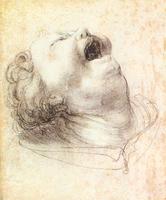
Head of a Shouting Man
Matthias Grünewald
Child's Head
Albrecht Durer
Child's head
Albrecht Durer
Weeping Angel boy
Albrecht Durer
Head Of Child
Andrea del Sarto
Head of a Child
Andrea del Sarto
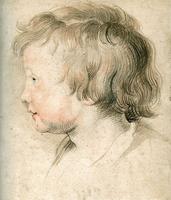
Albert Rubens
Peter Paul Rubens
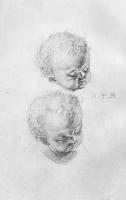
Study sheets with children's heads
Albrecht Durer
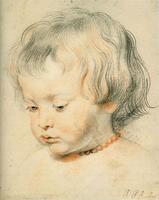
Nicolas Rubens
Peter Paul Rubens
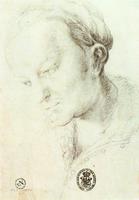
Head of a Young Woman
Matthias Grünewald
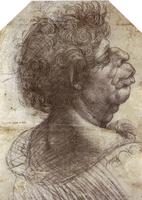
A Grotesque Head
Leonardo da Vinci
Self-portrait with long bushy hair
Rembrandt
Naked child, since mid body, arms crossed
Paolo Uccello
Portrait of boy
Peter Paul Rubens
The Damned Soul
Michelangelo
Face a woman turned towards the right
Annibale Carracci
Head of a Young Man
Andrea del Sarto
Portrait of a Boy
Rembrandt
Self Portrait
Jacopo Pontormo
Ambrosius and Hans, the Sons of the Artist
Hans Holbein the Elder