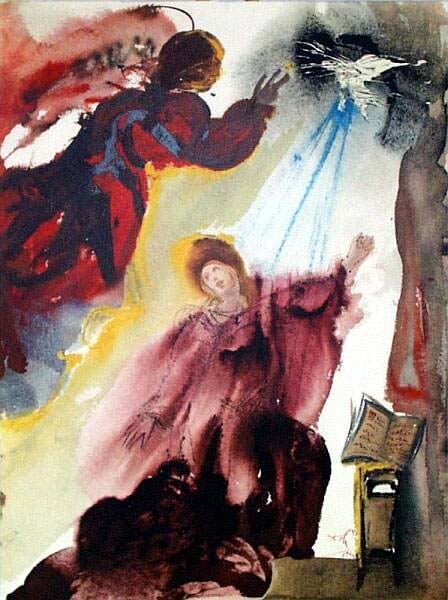
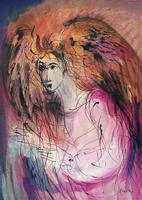
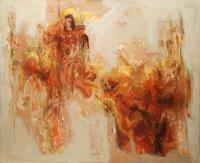
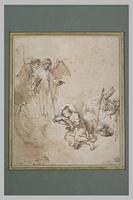
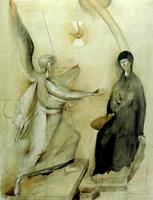
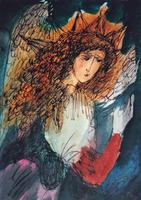
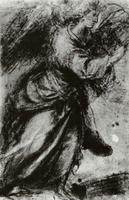
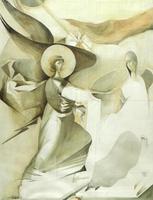
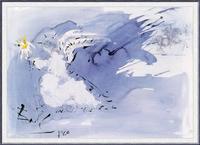
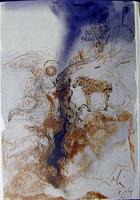
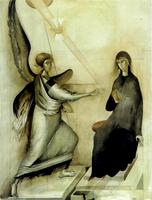
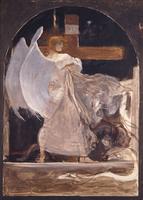
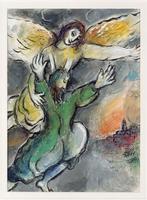
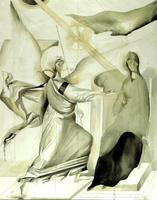
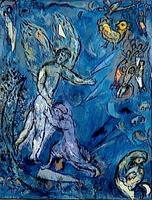
Salvador Dalí’s Mariae annunciato (Luke 1:26f), from his Classic Period (1941–1989), reimagines a traditional religious subject through the dual lenses of Expressionism and Symbolism. The work is significant for its fusion of emotional intensity (Expressionism) with layered, often mystical iconography (Symbolism), moving beyond Dalí’s earlier Surrealist dreamscapes into a more structured, spiritually resonant visual language. Painted within his “Classic” phase, it reflects the artist’s deepening engagement with Catholic themes while retaining his signature symbolic distortions. The Annunciation scene is rendered not as a literal narrative but as an expressive, symbol-laden meditation on divine intervention, characteristic of Dalí’s later religious works. This painting exemplifies how he synthesized expressionist emotionalism and symbolic allegory to modernize sacred art, marking a key transition in his career from avant-garde provocateur to a creator of contemplative, historically allusive imagery.