Expert Analysis: Triptych of Adriaan Reins by Hans Memling
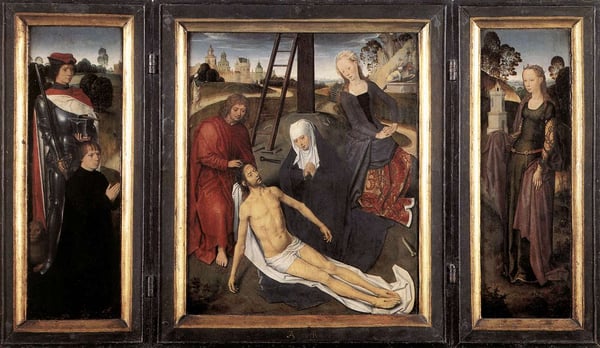
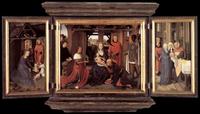
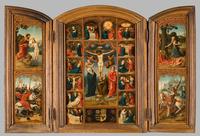
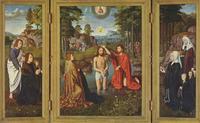
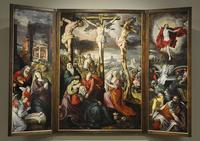
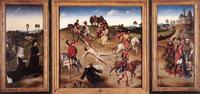
This devotional altarpiece exemplifies the refined naturalism and symbolic complexity of the Northern Renaissance. Memling, a master of Bruges, here combines meticulous attention to detail—seen in the rich fabrics, delicate landscapes, and precise textures—with a serene, harmonious composition typical of his mature style. The work’s significance lies in its integration of a specific donor, Adriaan Reins, into a sacred narrative: his kneeling portrait, accompanied by his patron saint, bridges the earthly and divine realms, a hallmark of Northern Renaissance patronage. The triptych format allows a layered reading: the central panel presents the holy subject (likely the Virgin and Child or a similar devotional scene), while the wings offer a blend of sacred history and contemporary piety. Memling’s use of luminous glazes and symbolic objects—such as lilies, books, or architectural details—reinforces the religious message while showcasing the era’s fascination with realism as a vehicle for spiritual contemplation. This work stands as a key example of how Northern Renaissance artists achieved both documentary precision and theological depth, making prayerful presence tangible for the viewer.