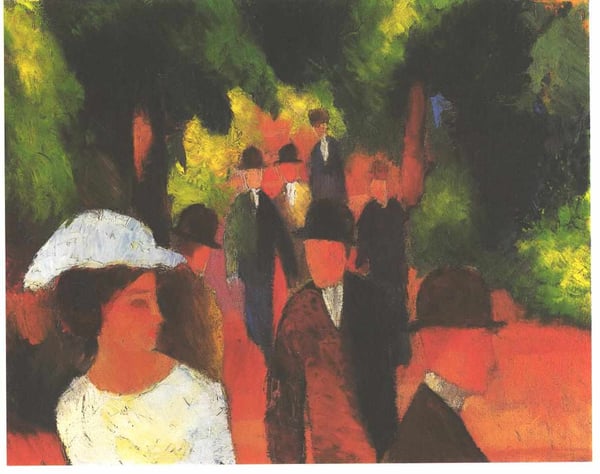
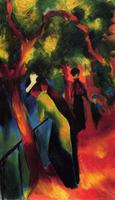
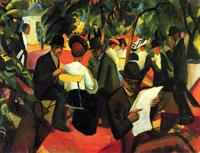
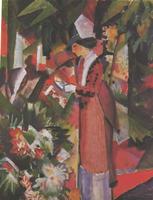
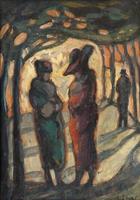
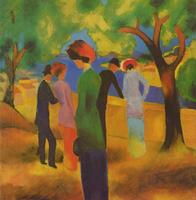
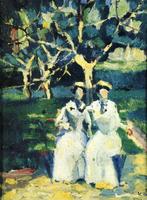
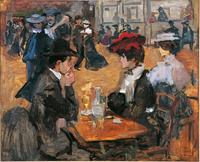
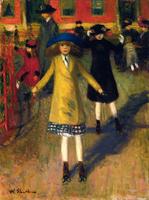
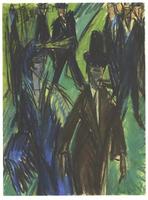
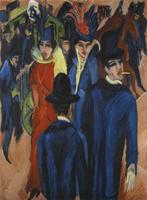
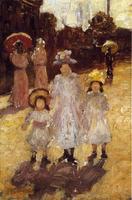
"Parkway" by August Macke is a quintessential example of German Expressionism’s vibrant, emotionally charged approach to everyday life. Painted in the early 1910s, the work captures a leisurely scene of strolling figures in a tree-lined avenue—a genre subject that Macke elevates through his signature use of pure, luminous color and simplified, rhythmic forms.
What makes this painting significant is how Macke synthesizes the bold colorism of Fauvism with the fractured planes of Cubism, yet retains a distinctly lyrical, optimistic tone. The figures are reduced to elegant silhouettes, their faces blank, allowing color—crisp blues, greens, yellows, and reds—to become the primary vehicle for mood. The parkway itself becomes a stage where nature and modern urban life harmonize, reflecting Macke’s belief in art as a source of spiritual joy. Tragically, Macke died in World War I just a year after this work, and pieces like "Parkway" stand as poignant final celebrations of the serene, pre-war world he depicted so vividly.