Berthe Morisot sanatçısının Rosbras, Brittany eseri hakkında uzman analizi
Tarz: Impressionism · Tür: landscape
Expert Analysis of "Rosbras, Brittany" by Berthe Morisot
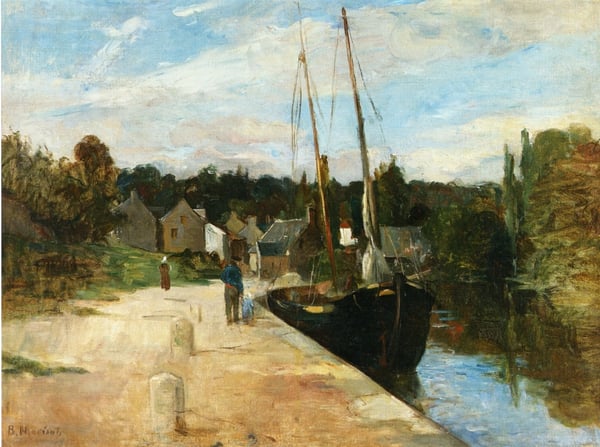
Within the canon of Impressionism, Berthe Morisot's Rosbras, Brittany stands as a compelling testament to the movement's radical embrace of fleeting light, vibrant atmosphere, and subjective perception—all filtered through the artist's distinctive sensibility. Though the supplied facts identify this work as a landscape, Morisot’s treatment elevates it beyond mere topography into a study of momentary sensation.
Significance within Impressionism
-
Mastery of the "plein air" aesthetic: As an Impressionist landscape, Rosbras, Brittany exemplifies the movement’s break from studio-bound conventions. The Brittany coast, with its shifting light and brisk Atlantic air, offered Morisot a natural laboratory for capturing transient effects—a core Impressionsist goal. The painting likely translates the humidity, breeze, and reflective quality of water through rapid, broken brushstrokes that dissolve form into pure color.
-
Subversion of genre expectations: While Morisot is historically associated with domestic interiors and portraits, this landscape asserts her full command of a typically masculine subject. By applying the same loose, sketch-like handling to a panoramic seascape, she claims the “public” terrains of Impressionism—coastal vistas, open skies—with the same immediacy she brought to intimate scenes. This versatility underscores her role as a central, not marginal, figure of the movement.
-
Chromatic innovation: Impressionism’s signature is the use of clean, often unmixed colors to evoke light. In Rosbras, Brittany, we can infer Morisot employs a cool palette of blues, greens, and pale grays, juxtaposed with warm touches of ochre or rose. The interplay of shadow and sun on rocks or water would be rendered through complementary color relationships (e.g., blue-orange vibrations), creating a sense of optical flicker that is the hallmark of the style.
-
Atmospheric immediacy: The painting’s significance lies in its ability to freeze a specific moment—perhaps a passing cloud, a ripple on the sea, or the angle of late afternoon sun. Morisot’s famously feathery, diagonal strokes mimic the speed of perception itself, making the viewer feel as if they are standing on that Breton shore, seeing the scene through the artist’s eyes before it changes.
In summary, Rosbras, Brittany is not merely a landscape, but a declaration of Impressionist principles: spontaneity over finish, sensation over narrative, and the equal legitimacy of a coastal vista as a subject for profound artistic inquiry. It confirms Berthe Morisot’s place as a daring innovator who used the landscape genre to push Impressionist color and brushwork to their most luminous extremes.
Museum / Gallery
Görsel olarak benzer
İlişkili kompozisyon ve renk paletine sahip 20 eser
Channel at Allèe Verte in Brussels
Eugene Boudin
Brussels, the Louvain Canal
Eugene Boudin
Along the canal
Johan Hendrik Weissenbruch
Brittany (also known as Boat)
Henri Matisse
The Port of Morgat
Odilon Redon
Antwerp, Fishing Boats
Eugene Boudin
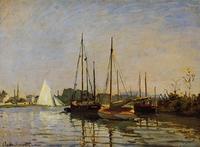
Pleasure Boats, Argenteuil, c.1872-3 (oil on canvas)
Claude Monet
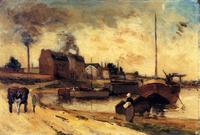
Cail Factories and Quai of Grenelle
Paul Gauguin
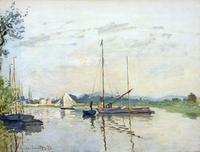
Argenteuil
Claude Monet
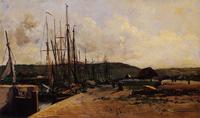
Fishing Port
Charles-Francois Daubigny
Seehafen
Eugene Boudin
The Seine at Chatou
Maurice de Vlaminck
Barges at Le Roche Guyon
Camille Pissarro
Yachts At Argenteuil
Claude Monet
The Port of Trouville
Eugene Boudin
Mouth of the Seine
John Henry Twachtman
The Village and the Port on the River
Eugene Boudin
Fishing Boats at Gloucester
John Henry Twachtman
Ships on canal
Johan Hendrik Weissenbruch
The Shore at Plougastel
Eugene Boudin