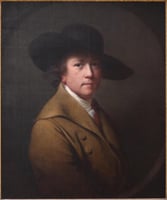
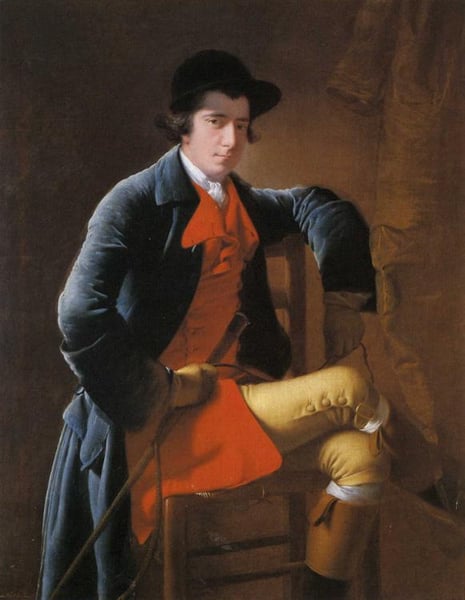
Analisi esperta di Nicholas Heath di Joseph Wright
Stile: Rococo, Romanticism · Genere: portrait
Expert Art Historical Analysis: Nicholas Heath by Joseph Wright
Joseph Wright of Derby (1734–1797) is celebrated for his dramatic chiaroscuro and his role in bridging the late Rococo with the emerging Romantic sensibility. His portrait Nicholas Heath exemplifies this transitional moment, combining the elegance of Rococo portraiture with the psychological depth and atmospheric intensity that foreshadow Romanticism.
Significance within Style and Period
Although Wright is most famous for his industrial and scientific scenes (e.g., An Experiment on a Bird in the Air Pump), his portrait of Nicholas Heath reveals a masterful handling of the human subject. The work belongs to a period when portraiture in Britain was moving away from the decorative, pastel-hued formalism of Rococo toward a more introspective, emotionally charged approach. Wright’s use of strong contrasts of light and shadow—a hallmark of his style—imbues the sitter with a sense of inner life and gravitas, far removed from the airy frivolity of earlier Rococo court portraits.
The painting’s significance lies in its fusion of two artistic currents:
-
Rococo influences are visible in the sitter’s refined posture, the subtle play of fabric and texture, and the touch of elegance in the composition. The portrait retains a sense of grace and sophistication characteristic of mid-18th-century British portraiture.
-
Romantic elements emerge in Wright’s focus on individual character and mood. The lighting is not merely decorative but dramatic—casting part of the face into shadow while illuminating the eyes and brow, suggesting a man of intellect and depth. This interiority, coupled with a tendency toward naturalism and emotional resonance, aligns with the Romantic ideal of portraying the unique soul of the subject.
Moreover, as a portrait of Nicholas Heath—likely a figure of regional or professional prominence—the work stands as a testament to Wright’s ability to elevate a conventional commission into a study of human presence. The painting demonstrates how Wright adapted the Rococo portrait tradition to the more earnest, morally and intellectually engaged spirit of early Romanticism.
Conclusion
Nicholas Heath is significant not only as a fine example of Joseph Wright’s portraiture but also as a document of stylistic evolution. It captures the moment when Rococo’s ornamental charm gave way to Romanticism’s passion for subjective experience and atmospheric power—making Wright a pivotal figure in the history of British art.
Museum / Gallery
Visivamente simili
20 opere con composizione e palette affini
Edward Becher Leacroft
Joseph Wright
John Bours
John Singleton Copley
Harry Peckham
Joseph Wright
Francis Noel Clarke Mundy
Joseph Wright
Sir Richard Arkwright
Joseph Wright
Sir Thomas Rumbold (1736–1791), Bt
George Romney
Portrait of Prince Andrei Petrovich Obolensky
Joseph Kreutzinger
The Man in the Riding Habit
Pierre-Paul Prud'hon
Francis Burdett
Joseph Wright
Abraham Rawlinson (1738–1803), MP, of Ellel Hall, near Lancaster
George Romney
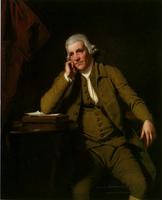
Jedediah Strutt
Joseph Wright
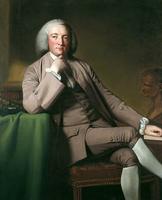
James Ainslie
George Romney
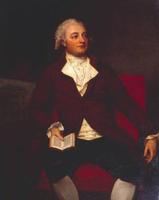
Dr John Matthews
George Romney
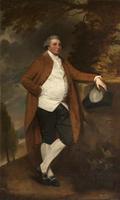
Sir John Trevelyan (1734–1828), 4th Bt
George Romney
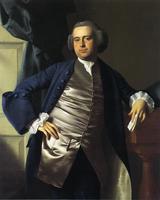
Moses Gill
John Singleton Copley
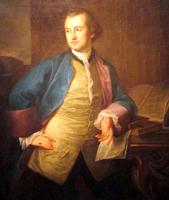
A portrait of John Morgan
Angelica Kauffman
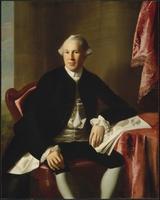
Portrait of Joseph Warren
John Singleton Copley
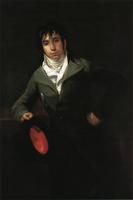
Bartholomew Sureda y Miserol
Francisco Goya
Portrait of Thomas Estcourt, Esquire
Pompeo Batoni
Portrait of Fleetwood Hesketh
Joseph Wright