Expert Analysis: "The Song of the Shepherd" by Pierre Puvis de Chavannes
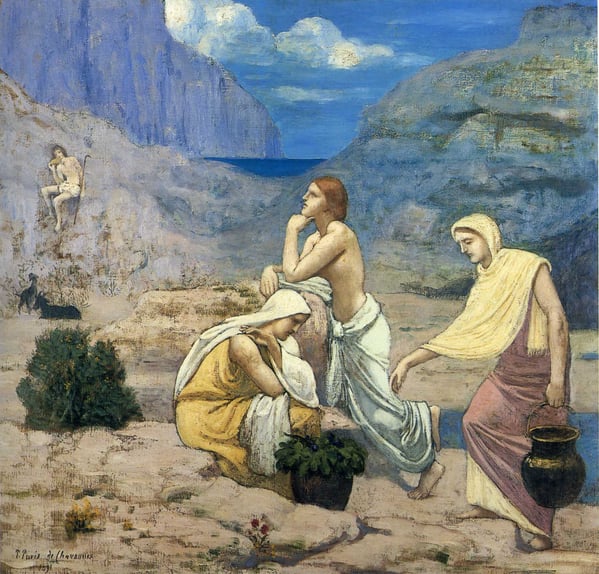
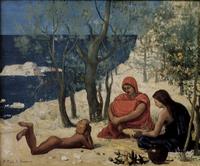
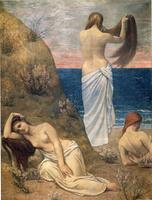
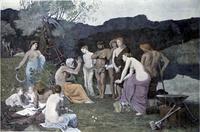
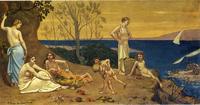
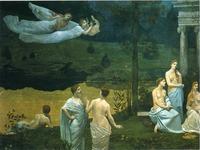
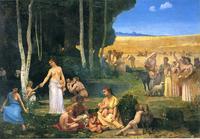
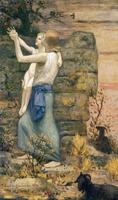
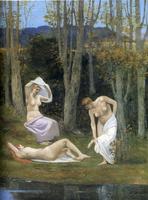
As a key work within the Symbolist movement, The Song of the Shepherd exemplifies Puvis de Chavannes’s radical departure from naturalism. Rather than depicting a literal pastoral moment, the painting transfigures a simple genre painting—a shepherd piping in a landscape—into a timeless, meditative vision. The composition deliberately flattens space and mutes color, evoking the frescoes of early Italian Renaissance masters and stripping away anecdotal detail. The shepherd’s isolated, hieratic posture and the hushed, dreamlike atmosphere transform his "song" into a symbol of humanity’s lost harmony with the natural world. Critically, Puvis de Chavannes’s synthetic, simplified style—rejecting both realism and academic narrative—paved the way for Post-Impressionism and modern mural painting. Here, the ordinary act of playing a pipe becomes a poetic allegory for the soul’s longing for simplicity, making the work a cornerstone of Symbolist thought: reality is merely a vessel for inner, universal truths.