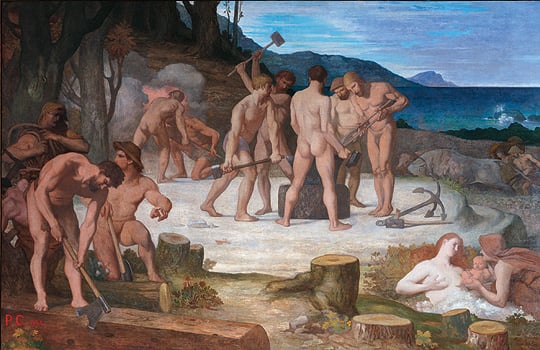
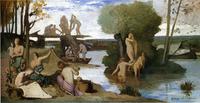
Pierre Puvis de Chavannes’ Work is a quintessential example of Symbolist genre painting, transforming a seemingly ordinary scene of laborers into a timeless, allegorical meditation on human industriousness and collective purpose. Within the Symbolist movement, Puvis distinguished himself by rejecting naturalistic detail in favor of simplified forms, muted palettes, and a frieze-like composition that lends the image a monumental, almost fresco-like stillness. The painting’s significance lies in how it elevates the genre of everyday work into a universal symbol of dignity and harmony, merging the mundane with the spiritual—a hallmark of Symbolism’s ambition to convey inner truths through outward imagery. Puvis’s influence on later modernists (including Gauguin and Seurat) is rooted in this very synthesis: Work demonstrates how a genre scene can transcend its narrative trappings to become a poetic emblem of the human condition, offering a serene, idealised vision of labor as a noble, communal ritual.