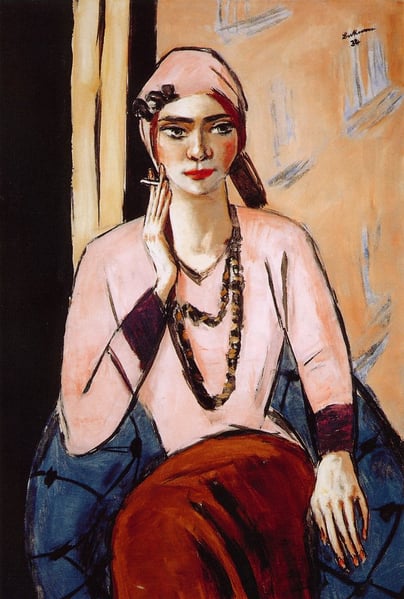
Quappi in Pink
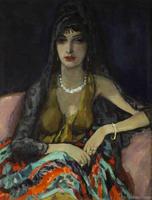
Expertenanalyse zu Max Beckmanns Quappi in Pink
Stil: Expressionism · Genre: portrait
Analysis of "Quappi in Pink" by Max Beckmann
As an Expressionist portrait, "Quappi in Pink" exemplifies the movement’s departure from naturalistic representation in favor of emotional and psychological intensity. Beckmann, a leading figure in German Expressionism, uses the portrait genre not merely to capture likeness, but to convey inner states through deliberate formal distortion. The title’s emphasis on the color pink—often associated with vitality, tenderness, or underlying tension—suggests a nuanced exploration of the sitter’s character. In this work, Beckmann’s signature bold outlines, compressed space, and heightened palette transform the traditional portrait into a charged psychological study. The significance lies in how the painting merges the intimacy of a personal likeness (Quappi was Beckmann’s wife and frequent model) with the broader Expressionist goal of projecting subjective experience. The choice of pink, a color that can oscillate between warmth and artifice, highlights Beckmann’s ability to use hue as a vehicle for emotional ambiguity, making the work a compelling example of how Expressionism redefined portraiture as a medium for existential and intimate truths.
Visuell ähnlich
20 Werke mit ähnlicher Komposition und Farbpalette
Young woman in Pink
Henri Matisse
Autoritratto
Bice Lazzari
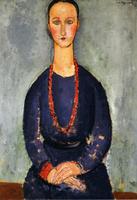
Woman with a Red Necklace
Amedeo Modigliani
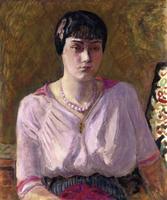
Portrait of a girl, Mademoiselle Renee Terrasse
Pierre Bonnard
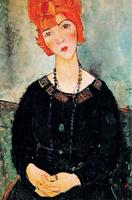
Woman With a Necklace
Amedeo Modigliani
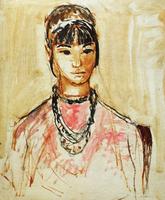
Girl with Beads
George Stefanescu
Selling
Jan Sluyters
Portrait of E.E. Zelenkova nee Lancere
Zinaida Serebriakova
Kadusha
Kuzma Petrov-Vodkin
Odalisque
Henri Matisse
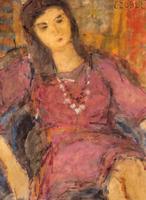
Czóbel Béla Női Portré, Olaj Vászon,81x61cm
Bela Czobel
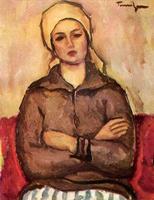
Workwoman
Nicolae Tonitza
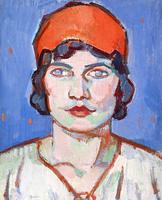
Portrait of a Girl, Red Bandeau
Samuel Peploe
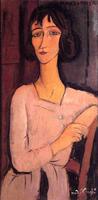
Margarita seated
Amedeo Modigliani
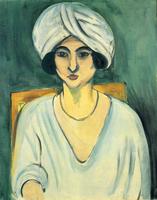
Woman in Turban (Lorette)
Henri Matisse
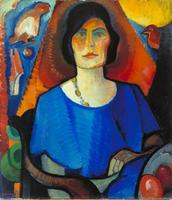
Self-Portrait
Else Berg
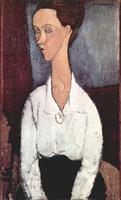
Portrait of Lunia Czechowska in white blouse
Amedeo Modigliani
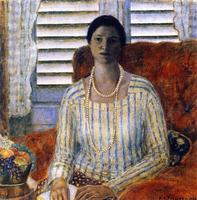
Closed Blinds
Frederick Carl Frieseke
Chakoska
Amedeo Modigliani
Le voile Persan
John Duncan Fergusson