Análisis experto de Countryside with Trees de Umberto Boccioni
Estilo: Divisionism · Género: landscape
Expert Analysis of "Countryside with Trees" by Umberto Boccioni
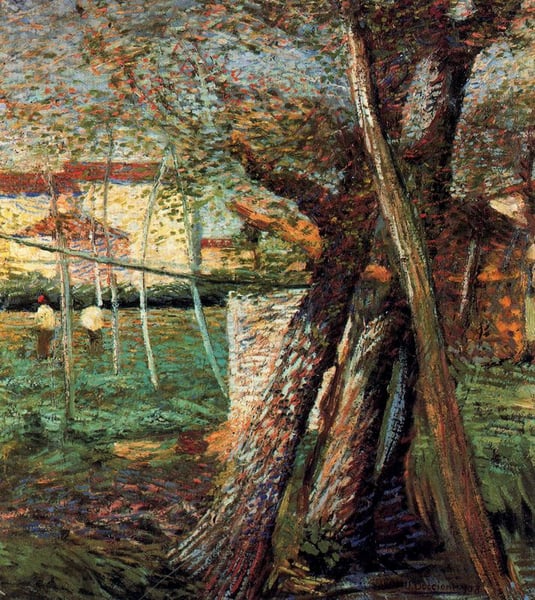
Umberto Boccioni’s Countryside with Trees (c. 1908–1909) is a compelling example of his early engagement with Divisionism, a painting technique derived from Neo-Impressionism that breaks color into distinct, separate touches—dots or short strokes—meant to optically blend in the viewer’s eye. Within the landscape genre, this work is significant for several reasons:
-
Boccioni’s Pre-Futurist Foundation: While Boccioni is best known as a leading theorist and painter of Futurism—celebrating speed, technology, and urban dynamism—Countryside with Trees reveals his solid roots in Divisionist color theory. The painting’s luminous, fragmented application of pigment (particularly visible in the foliage and sky) demonstrates his mastery of the scientific approach to light and color championed by Giovanni Segantini and other Divisionists. This technical discipline became the backbone for the vibrating, energetic surfaces of his later Futurist works.
-
Transition from Static to Dynamic: The composition is still largely traditional—a bucolic, rural view with a strong horizon line and orderly tree trunks—but Boccioni injects a subtle sense of movement through the broken brushwork. The dappled light appears to shimmer, and the color patches refuse to settle into a fixed, static atmosphere. This tension between a calm subject and a restless technique foreshadows his Futurist obsession with motion and “dynamic sensation.”
-
Divisionism as a Vehicle for Modernity: For Boccioni and his Milanese circle, Divisionism was not merely a nostalgic imitation of French Pointillism; it was a tool to express the modern world’s vibrant, fragmented sensory experience. In Countryside with Trees, the landscape is not idealized or smooth—it is built from separate, almost analytical strokes of pure color, suggesting that even nature is seen through a modern, scientific lens. This approach directly informed the group’s 1910 Technical Manifesto of Futurist Painting, which called for “the dynamic sensation” and “the vibration of light.”
In summary, Countryside with Trees is significant because it captures Boccioni at a crucial crossroads: deeply skilled in Divisionist practice yet already pushing its boundaries toward a new, kinetic vision. It exemplifies how a traditional landscape genre could be transformed by a forward-looking technique, laying the groundwork for Futurism’s revolutionary break with the past.
Visualmente similares
20 obras con composición y paleta relacionadas
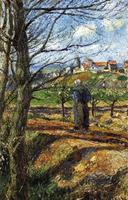
Near Pontoise
Camille Pissarro
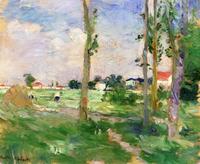
Landscape of Creuse
Berthe Morisot
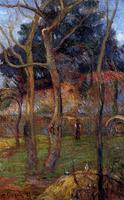
Bare Trees
Paul Gauguin
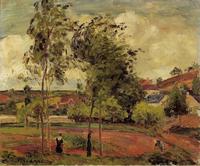
Strong Winds, Pontoise
Camille Pissarro
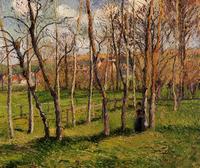
Meadow at Bazincourt
Camille Pissarro
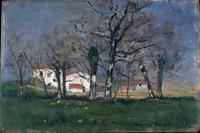
Farm in the Trees
Maxime Maufra
Landscape near Louveciennes 2
Camille Pissarro
Meadow at Bazincourt
Camille Pissarro
The Green Lot
Henri Martin
View Towards Pontoise Prison, in Spring
Camille Pissarro
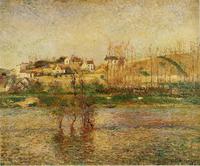
Flood in Pontoise
Camille Pissarro
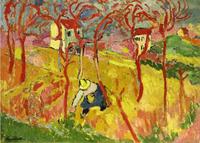
The Gardener
Maurice de Vlaminck
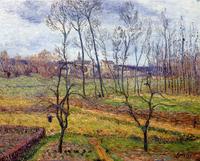
Overcast Weather at Nesles la Vallee
Gustave Loiseau
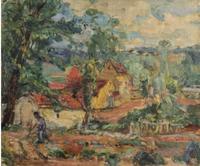
Dans Le Jardin
Michel Kikoine
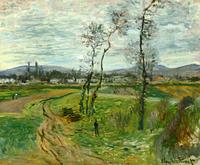
Gennevilliers Plain
Claude Monet
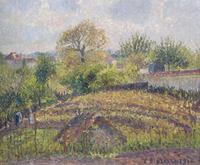
In the Garden
Camille Pissarro
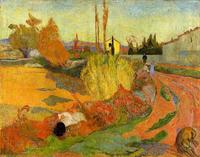
Landscape at Arles
Paul Gauguin
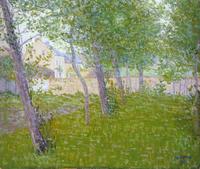
Garden by the House
Gustave Loiseau
Marie Louise House
Henri Martin
Near Colliure in Twilight
Henri Martin