Expert analysis of Camille Pissarro’s Meadow at Bazincourt
Style: Impressionism · Genre: landscape
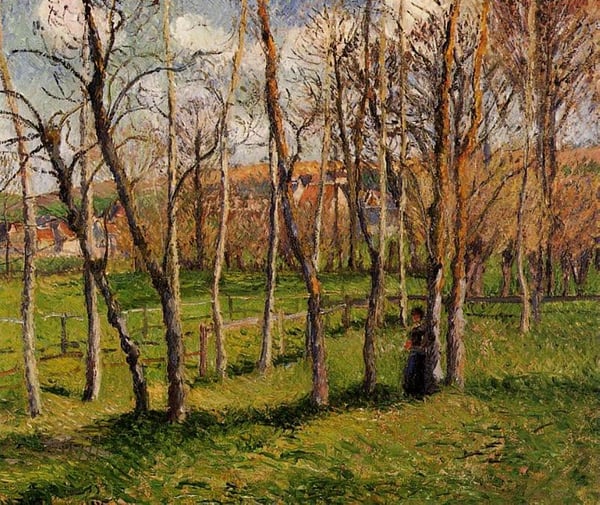
Expert Analysis: "Meadow at Bazincourt" by Camille Pissarro
As an Impressionist landscape, Camille Pissarro’s Meadow at Bazincourt embodies the core principles that defined the movement and highlights the artist’s pivotal role in its development. Pissarro, often called the “dean of the Impressionists,” was a master of capturing the transient effects of light and atmosphere on the natural world.
The significance of this work lies in its quintessential Impressionist approach:
-
Plein Air Execution: The painting reflects the Impressionist practice of working outdoors to observe and record the changing conditions of light and weather. The meadow setting at Bazincourt—a region Pissarro frequented—becomes a living, breathing environment rather than a static backdrop.
-
Luminous Palette and Loose Brushwork: Pissarro employs a high-key, broken-color technique, using short, visible strokes of pure pigment to render the interplay of sunlight on grass, foliage, and sky. This method captures the shimmering, ephemeral quality of a summer meadow, evoking a sense of immediacy and sensory richness.
-
Everyday Subject Matter: By choosing an unassuming meadow rather than a grand historical or mythological scene, Pissarro elevates the mundane to the extraordinary—a hallmark of Impressionism. The landscape is not idealized but observed with freshness and authenticity.
-
Atmospheric Unity: The composition skillfully balances sky, field, and distant elements, suggesting the hazy, atmospheric effects that mute contours and blend hues. This dissolution of hard outlines aligns with the Impressionist desire to depict nature as an integrated, sensory whole.
Within the Impressionist canon, Meadow at Bazincourt is significant because it showcases Pissarro’s lifelong commitment to landscape as a vehicle for exploring perception. His work here anticipates later developments in the movement, emphasizing color harmony and the psychological impact of natural light. The painting stands as a testament to Pissarro’s belief that the simplest corner of the countryside could be a source of endless visual revelation—a core tenet of Impressionist modernism.
Museum / Gallery
Visually similar
20 works with related composition and palette
Meadow at Bazincourt
Camille Pissarro
Trees in Winter, View of Bennecourt
Claude Monet
Near the Seine at By
Alfred Sisley
At Montreuil, France
James Charles
Small Meadows in Spring
Alfred Sisley
Overcast Weather at Nesles la Vallee
Gustave Loiseau
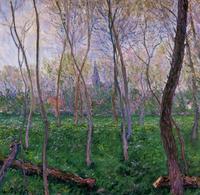
Bennecourt
Claude Monet
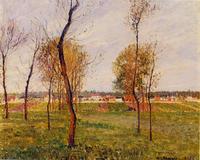
A Meadow in Moret
Camille Pissarro
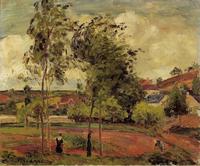
Strong Winds, Pontoise
Camille Pissarro
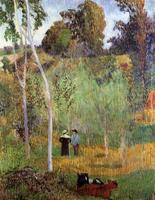
Sheperd and sheperdess in a meadow
Paul Gauguin
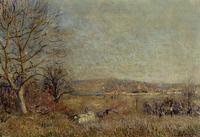
The Plain of Veneux, View of Sablons
Alfred Sisley
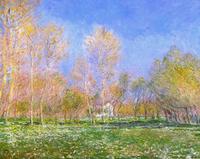
Springtime in Giverny
Claude Monet
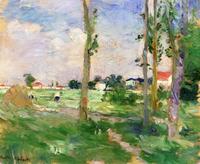
Landscape of Creuse
Berthe Morisot
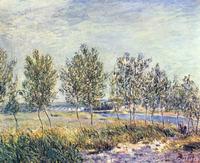
Wiese By
Alfred Sisley
Port Pinche at the Turn of the Seine
Gustave Loiseau
Morning Sunlighton the Snow, Eragny-sur-Epte
Camille Pissarro
Near Saint Cyr
Gustave Loiseau
The Forest at Boulogne
Alfred Sisley
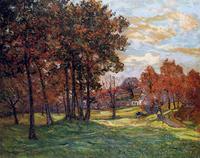
Autumn Landscape at Goulazon
Maxime Maufra
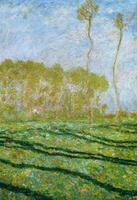
Springtime Landscape at Giverny
Claude Monet