Expertenanalyse zu Camille Pissarros Meadow at Bazincourt
Stil: Impressionism · Genre: landscape
Expert Analysis: "Meadow at Bazincourt" by Camille Pissarro
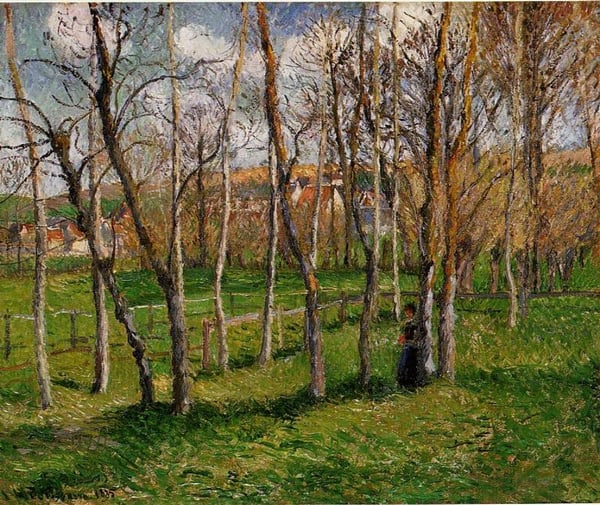
Camille Pissarro’s Meadow at Bazincourt stands as a quintessential example of Impressionist landscape painting, embodying the movement’s revolutionary approach to capturing light, atmosphere, and the rhythms of rural life. As the only artist to exhibit in all eight Impressionist exhibitions, Pissarro was both a stalwart of the group and a mentor to figures like Cézanne and Gauguin. This work demonstrates his deep commitment to en plein air painting—direct observation of nature under changing conditions—and his lifelong fascination with the agrarian landscape.
The painting’s significance lies in its masterful handling of transient optical effects. Pissarro employs a broken, dappled brushstroke to render the meadow, sky, and foliage as shimmering patches of color that dissolve into a unified whole when viewed from a distance. The composition is deceptively simple: a broad expanse of green field, a cluster of trees, and a low horizon line that emphasizes the open sky. Yet within this structure, Pissarro captures the subtle play of sunlight on grass and leaves, the shifting shadows of clouds, and the humid atmosphere of the French countryside. The palette—soft greens, ochres, pale blues, and touches of lavender—evokes the specific quality of northern French light in late spring or summer.
Pissarro’s choice of subject is also deeply significant. Unlike many Impressionists who favored urban scenes, he consistently returned to the rural landscape, elevating the mundane agricultural life to a dignified, almost timeless realm. Meadow at Bazincourt reflects his anarchist sympathies and belief in the harmony of peasant labor with nature. Here, no human figures dominate; the meadow itself becomes a protagonist, a living, breathing entity shaped by weather and season. This focus on the everyday, rendered with scientific attention to color relationships and optical mixing, marks a pivotal moment in art history—the departure from narrative and idealism toward a direct, sensory experience of the world.
In summary, Meadow at Bazincourt exemplifies Pissarro’s role as the “father of Impressionism,” bridging the movement’s early radicalism with a serene, meditative vision of nature. It remains a testament to his belief that the truest art emerges from the patient observation of the ordinary.
Museum / Gallery
Visuell ähnlich
20 Werke mit ähnlicher Komposition und Farbpalette
Meadow at Bazincourt
Camille Pissarro
Trees in Winter, View of Bennecourt
Claude Monet
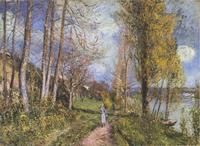
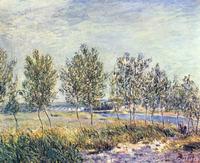
Near the Seine at By
Alfred Sisley
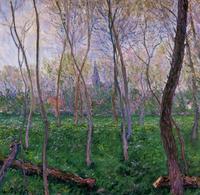
Bennecourt
Claude Monet
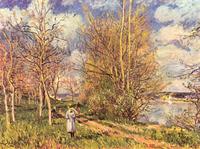
Small Meadows in Spring
Alfred Sisley
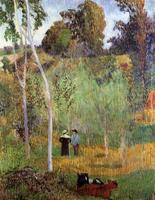
Sheperd and sheperdess in a meadow
Paul Gauguin
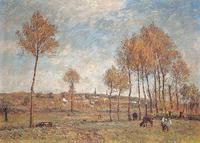
At Montreuil, France
James Charles
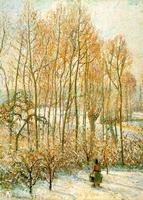
Morning Sunlighton the Snow, Eragny-sur-Epte
Camille Pissarro
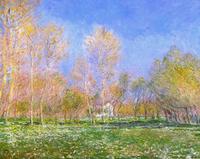
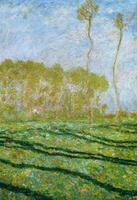
Springtime in Giverny
Claude Monet
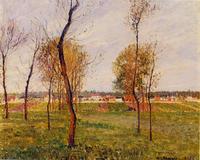
A Meadow in Moret
Camille Pissarro
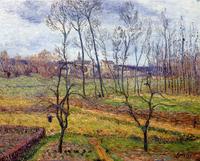
Overcast Weather at Nesles la Vallee
Gustave Loiseau
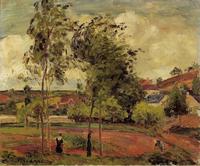
Strong Winds, Pontoise
Camille Pissarro
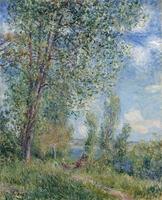
Windy Afternoon in May
Alfred Sisley
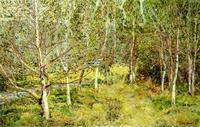
Spring Woods
Childe Hassam
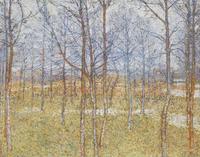
Spring landscape
Kazimir Malevich
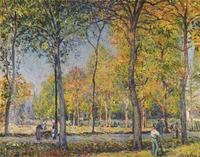
The Forest at Boulogne
Alfred Sisley
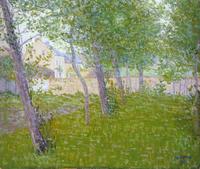
Garden by the House
Gustave Loiseau
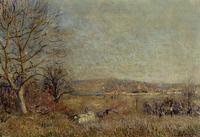
The Plain of Veneux, View of Sablons
Alfred Sisley
Wiese By
Alfred Sisley
Springtime Landscape at Giverny
Claude Monet