Expertenanalyse zu Arnold Böcklins The sea
Stil: Symbolism · Genre: mythological painting
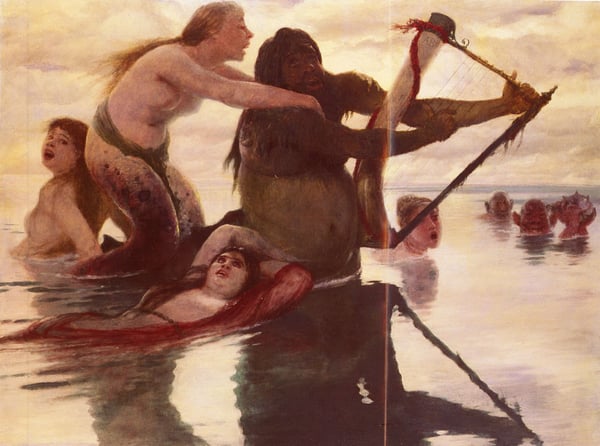
As a Symbolist mythological painting, "The sea" by Arnold Böcklin derives its significance from the fusion of two key elements: the Symbolist style and the mythological genre.
Symbolism, as a movement, prioritized subjective emotion, dreamlike atmospheres, and the evocation of inner states over literal representation. In this context, the mythological subject matter is not merely a narrative retelling but a vehicle for exploring timeless, often mysterious themes—such as nature’s power, human mortality, or the tension between the rational and the irrational.
By grounding the painting in mythology, Böcklin taps into a shared cultural vocabulary of archetypes (sea gods, nymphs, or ancient allegories), yet treats them through Symbolism’s lens of ambiguity and suggestion. The sea itself becomes a symbolic entity: vast, unpredictable, and laden with psychological or spiritual meaning.
The artwork’s importance lies in how it exemplifies Symbolism’s departure from naturalism and academic history painting, instead using myth to create a poetic, introspective experience. It invites viewers not to decode a fixed story but to engage with the painting’s mood, mystery, and symbolic resonance—hallmarks that make Böcklin’s work a landmark within the Symbolist movement.
Museum / Gallery
Visuell ähnlich
20 Werke mit ähnlicher Komposition und Farbpalette
The Water-Sprite and Ägir's Daughters
Nils Blommér
Sappho
Mikhail Vrubel
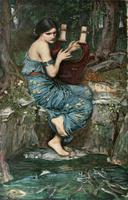
The Charmer
John William Waterhouse
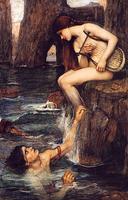
The Siren
John William Waterhouse
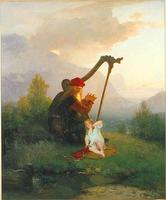
Kung Heimer och Aslög
August Malmstrom
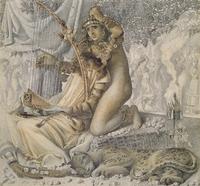
Babylon Hath Been a Golden Cup
Simeon Solomon
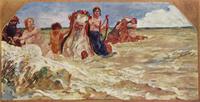
Meeresgötter in Der Brandung
Max Klinger
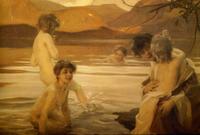
Premier Bain
Paul Émile Chabas
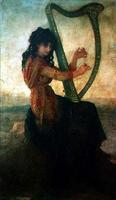
Muse in Dalmatic playing the harp
Ernest Hébert
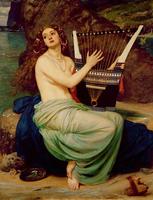
the Siren
Edward Poynter
The Oceanides
Gustave Dore
Konec Všech Věcí
Maximilian Pirner
Triton and Nereid
Arnold Böcklin
Sleeping Fisherman with Mermaids
Wilhelm Kray
The Spirit of Song
Charles William Mitchell
The music
Ernest Hébert
Baccants Returning Home
Lovis Corinth
Arthur Hacker The Sea Maid
Arthur Hacker
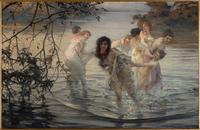
Dancing Nymphs
Paul Émile Chabas
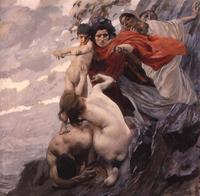
Love and the Fates
Ettore Tito