Экспертный разбор работы «Rocky Landscape» художника Adolphe Joseph Thomas Monticelli
Стиль: Romanticism · Жанр: landscape
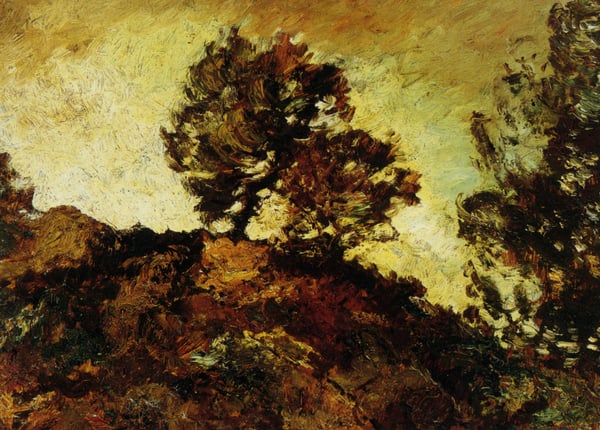
Adolphe Joseph Thomas Monticelli’s Rocky Landscape is a compelling example of Romantic landscape painting that pushes toward proto-Impressionist innovation. Here is an expert analysis focused on its significance within the style and period:
Artist & Context:
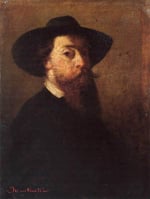
Monticelli, a French painter active in the mid-19th century, worked largely outside the mainstream academic tradition. His lush, heavily impastoed canvases anticipate the freedom of Impressionism while remaining rooted in Romanticism’s emotional intensity and reverence for nature.
Analysis of Significance in Romanticism:
- Sublime vs. Picturesque: The “rocky” terrain is not merely a backdrop but a protagonist. Romantic landscapes often used rugged, irregular rock formations to evoke nature’s untamed power and the sublime—a feeling of awe mixed with terror. Monticelli’s rocky outcrops function as dramatic, almost sculptural forms that dominate the composition, aligning with Romanticism’s fascination with wild, uncontrolled landscapes.
- Color and Light as Emotion: Monticelli departs from neoclassical clarity. He applies thick, glistening strokes of jewel-like pigment (ruby reds, deep greens, golden ochres) that seem to shimmer. This technique, known as impasto, creates a tactile surface that suggests the shimmer of light on rock and earth, conveying a mood of mystery and reverie rather than topographical accuracy. This emotional use of color and texture is a hallmark of Romantic landscape.
- Influence on Later Movements: Monticelli’s freely handled, vibrant surfaces directly inspired Vincent van Gogh, who admired his work and adopted a similar thick, expressive brushwork. Thus, Rocky Landscape stands at a crossroads: it fulfills Romanticism’s desire to express inner feeling through nature while anticipating the coloristic liberation of Post-Impressionism and Fauvism.
What Makes It Significant:
Monticelli’s landscape is significant because it demonstrates how Romanticism’s core ideals—individual expression, emotional truth, and the sublime in nature—could be pushed into a highly personal, almost abstract pictorial language. Rather than imposing a classical order on the scene, he lets the rocky forms and flickering light dissolve into a rich, unified atmosphere. This work is not just a depiction of a place; it is a record of the artist’s passionate response to the world, making it a vital link between the Romantic sensibility and the modernist spirit that followed.
Museum / Gallery
Визуально похожие
20 работ с близкой композицией и палитрой
Cagnes Landscape
Pierre-Auguste Renoir
Landscape
Paul Cezanne
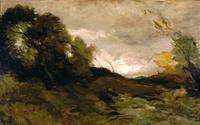
Lonesome Valley
Camille Corot
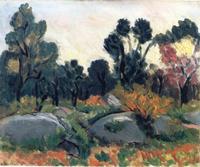
Landscape
Henri Matisse
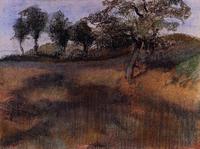
Plowed Field
Edgar Degas
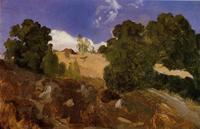
Head of Bearded Man (Study for The Baptism of Christ )
Camille Corot
Sunset at Giverny
Claude Monet
Landscape
Pierre-Auguste Renoir

Sunlit Hillside
Robert Julian Onderdonk
Landscape
Pierre-Auguste Renoir
In the Woods (study)
Pierre Bonnard
Twisted Trees on a Ridge (Sunset)
Camille Corot
Purple Landscape
Pierre-Auguste Renoir
Landscape
Pierre-Auguste Renoir
Rocks in the Vallée Du Loup
Henri Matisse
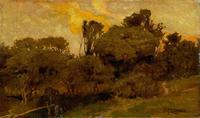
Landscape, Sunset
Frederick George Cotman
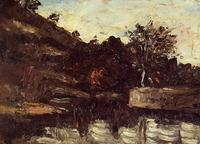
Bend in the River
Paul Cezanne

Landscape
Pierre-Auguste Renoir
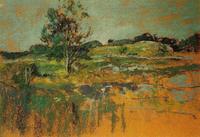
The Ledges
John Henry Twachtman
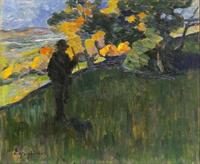
Egry József, Kilátás a Domról, 1906
Egry József