Expertenanalyse zu Robert Julian Onderdonks Landscape Sketch
Stil: Impressionism · Genre: landscape
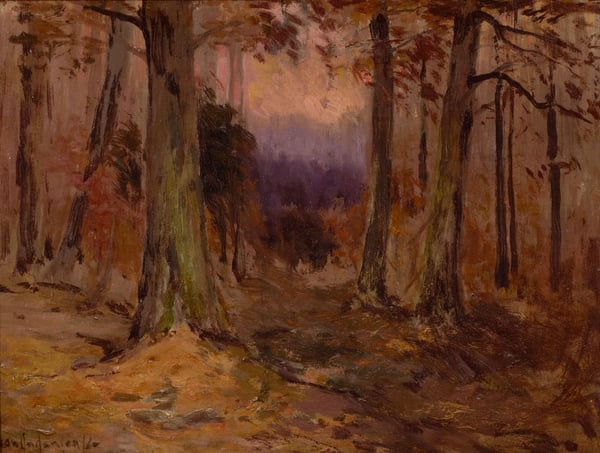
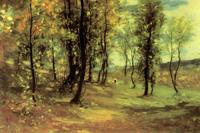
As an expert art historian, I can provide an analysis of Robert Julian Onderdonk’s Landscape Sketch based solely on the given facts: it is an Impressionist landscape. The work’s significance lies in how it embodies the core tenets of Impressionism while also reflecting the artist’s unique position within American art.
Significance within Impressionism and the Artist’s Oeuvre
Robert Julian Onderdonk (1882–1922) is celebrated as the “father of Texas painting,” and this Landscape Sketch exemplifies the Impressionist emphasis on capturing fleeting atmospheric effects over precise topographical detail. The genre of landscape, central to Impressionism, is treated here with the spontaneous, on-the-spot approach typical of a sketch, which was often a finished statement for artists like Onderdonk. The work’s significance can be broken down into several key aspects:
-
Embodiment of Impressionist Technique: The label “sketch” suggests loose, visible brushwork that prioritizes the sensation of light and color over meticulous form. This aligns directly with the Impressionist goal of rendering the “impression” of a scene—the shifting play of sunlight, shadow, and reflections. The absence of rigid outlines and the use of broken color (small strokes of pure pigment) would create a vibrating, atmospheric surface.
-
Regional Adaptation of an International Style: Onderdonk was trained in New York (under William Merritt Chase) and later in Europe, yet he applied Impressionist principles to the distinctive landscape of Texas. This Landscape Sketch likely depicts the rolling hills and wildflowers (such as bluebonnets) of the Texas Hill Country, making it a significant document of how Impressionism was localized in America. Many artists focused on Northeastern or European views; Onderdonk’s work captured the luminous, dry heat and vast skies of the South, broadening the movement’s geographic scope.
-
The Value of the “Sketch” in Impressionism: In Impressionist practice, the finished sketch was highly prized for its immediacy and authenticity. An artwork titled “Landscape Sketch” underscores the notion that a direct, unvarnished response to nature—closer to the artist’s first sensation—is more “true” than a heavily reworked studio piece. This belief was revolutionary at the time and remains central to Impressionism’s legacy.
-
Contribution to American Impressionism’s Identity: While French Impressionism often depicted leisure and urban scenes, American Impressionists (especially those in the West and South like Onderdonk) frequently focused on unspoiled, pastoral nature. This work, through its genre and style, would highlight the tension between European technique and American subject matter—a key factor in the significance of the American Impressionist movement.
In sum, the Landscape Sketch is not merely a minor preparatory work but a concentrated statement of Impressionist values—spontaneity, luminosity, and the celebration of a specific, regional landscape. Its significance lies in how it uses a universal style to document a particular place and moment, tying Onderdonk’s legacy to both the international Impressionist canon and the cultural identity of Texas.
Visuell ähnlich
20 Werke mit ähnlicher Komposition und Farbpalette
Forest with Sunlit Clearing in the Background
Egon Schiele
Forest road
Ivan Shishkin
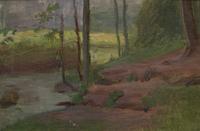
Sunbeam
Grigoriy Goldstein
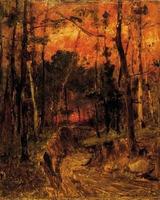
Sunset in the Forest
Mihaly Munkacsy
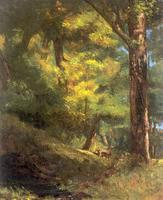
Two Roe Deers in the Forest
Gustave Courbet
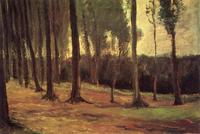
Edge of a Wood
Vincent van Gogh
Figures in a Forest
Camille Corot
A Birch Grove
Arkhyp Kuindzhi
Tulip Tree, Greenwich
John Henry Twachtman
Vernon Beeches
T. C. Steele
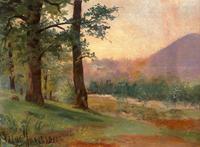
Vid Skogsbrynet
Eugène Jansson
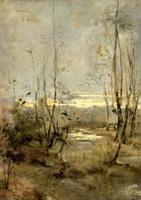
Landscape
Umberto Veruda
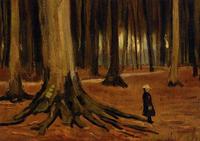
Girl in the Woods
Vincent van Gogh
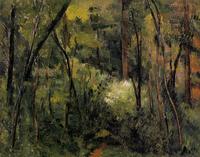
In the Woods
Paul Cezanne
Forest Vista
Stefan Popescu
Blick in eine schwäbische Landschaft mit dichter Bewaldung
Theodor Christoph Schuz
Autumn Forest
Max Slevogt
Path in the forest
Isaac Levitan
Clearing Back
Nicolae Grigorescu
Landscape of Cascine
Giorgio de Chirico