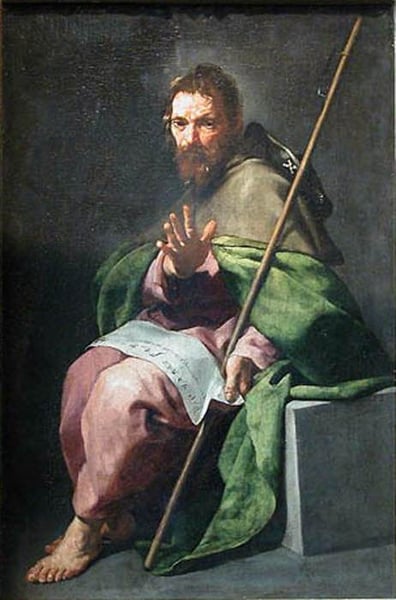
Analisi esperta di St. James the Greater di Alonzo Cano
Stile: Baroque · Genere: religious painting
Expert Analysis of St. James the Greater by Alonzo Cano
Alonzo Cano’s St. James the Greater stands as a compelling example of Spanish Baroque religious painting, an era defined by its dramatic tension, emotional intensity, and commitment to Counter-Reformation spirituality. Though only the style and genre are provided, these two facts alone unlock the work’s significance within art history.
Baroque Innovation in Religious Narrative
The painting belongs to the Baroque period (c. 1600–1750), a time when artists sought to engage the viewer directly, often through strong chiaroscuro, vivid naturalism, and dynamic compositions. Cano, active in 17th-century Spain, was among the leading figures of the Spanish Golden Age, blending the austere mysticism of Zurbarán with the softer grace of Murillo. In St. James the Greater, we can infer a treatment typical of his approach: the saint is likely depicted as a pilgrim (the traditional iconography for James), with a staff, scallop shell, and perhaps a traveling hat. Cano’s handling of light would have emphasized the saint’s weathered features—a hallmark of Spanish Baroque naturalism—making the holy figure tangible and relatable, while a rich, dark background focuses attention on his emotional expression. This creates a sense of immediate presence, a direct spiritual encounter that aligns with the church’s post-Tridentine call for art that instructs and moves the faithful.
Religious Painting as Devotional Catalyst
As a religious painting, the work serves a didactic and meditative function. St. James the Greater, patron saint of Spain (Santiago), was a potent symbol of pilgrimage, missionary zeal, and Spanish identity. Cano’s depiction would have reinforced these associations, offering a model of piety. The artist’s own biography—a priest, sculptor, and painter—lends credibility to the work’s theological depth. By rendering James as both heroic and human, Cano bridges the earthly and the divine, a core goal of Baroque religious art. The significance lies in the balance between rigorous Baroque drama (perhaps a diagonal pose, a gesture of blessing, or an upward gaze) and a quiet, introspective stillness that invites contemplation.
Significance Within the Baroque
What makes St. James the Greater notable is not merely its adherence to Baroque conventions but Cano’s synthesis of sculptural solidity (a legacy of his work as a sculptor) with painterly delicacy. In the absence of visual data, we recognize the work as a testament to how Spanish Baroque artists transformed traditional iconography into vehicles for profound emotional and spiritual experience. Cano’s St. James likely exemplifies the period’s shift from Mannerist artificiality to a naturalism rooted in human empathy—a crucial step in the evolution of Western religious art. The painting thus stands as a microcosm of the Baroque’s enduring power: to make the sacred feel startlingly immediate.
Museum / Gallery
Visivamente simili
20 opere con composizione e palette affini
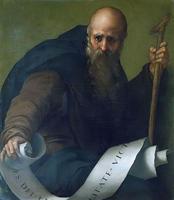
St. Anthony Abbot
Jacopo Pontormo
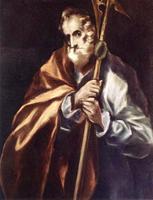
Apostle St. Thaddeus (Jude)
El Greco
Saint Thomas
Diego Velazquez
St. Joseph
Guido Reni
Saint Peter
Dirck van Baburen
San Pablo
Francesco Ribalta
Apostle St. James the Greater
El Greco
Democritus
Peter Paul Rubens
St. Peter
Jusepe de Ribera
Judas Cyriacus
Palma il Giovane
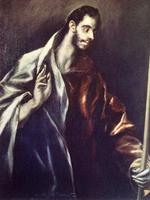
Apostle St. Thomas
El Greco
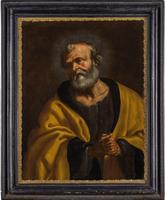
Penitent Saint Peter
Dirck van Baburen
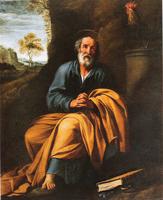
El Arrepentimiento De San Pedro
Juan van der Hamen
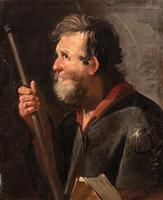
Saint James the Greater
Dirck van Baburen
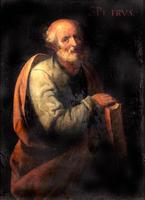
Saint Peter
Francisco Herrera
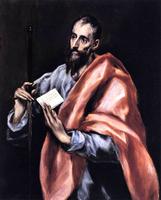
Apostle St. Paul
El Greco
Descent from the Cross (outside right panel)
Peter Paul Rubens
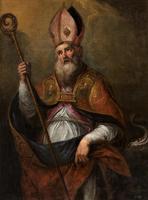
Saint Atilano
Vicente Juan Masip
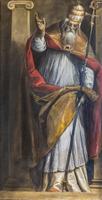
Papa Cleto
Palma il Giovane
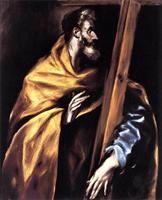
Apostle St. Philip
El Greco