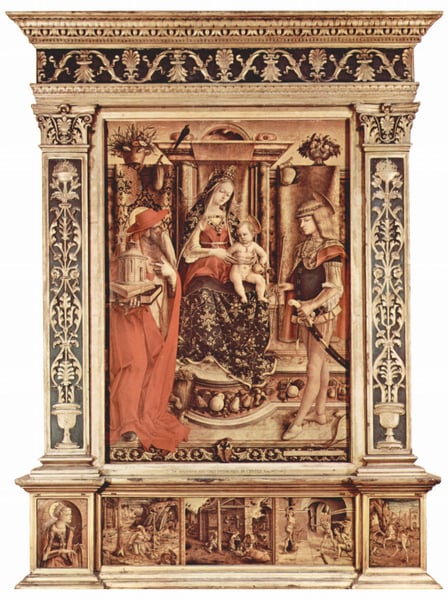
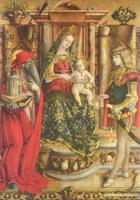
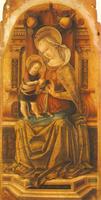
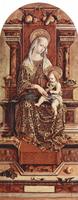
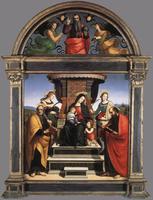
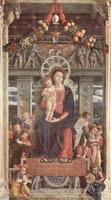
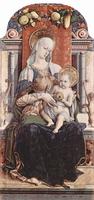
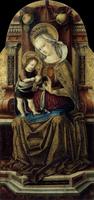
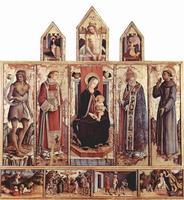
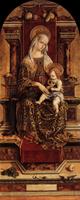
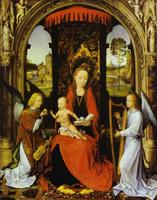
As an expert analysis based solely on the provided facts, “Enthroned Madonna, St. Jerome and St. Sebastian” by Carlo Crivelli is significant as a quintessential example of Early Renaissance religious painting. In this period, artists moved beyond the flat, symbolic forms of medieval art toward greater naturalism, spatial depth, and emotional engagement, while still serving devotional purposes. Crivelli’s work embodies this transition: the “Enthroned Madonna” format anchors the composition in a sacred hierarchy, while the inclusion of saints Jerome and Sebastian reflects the period’s focus on humanizing holy figures through detailed, individualized attributes. The painting’s significance lies in how it balances the formal, iconic requirements of a religious altarpiece with the Renaissance innovation of creating a believable, structured space for the figures—a hallmark of the era that laid groundwork for later developments.