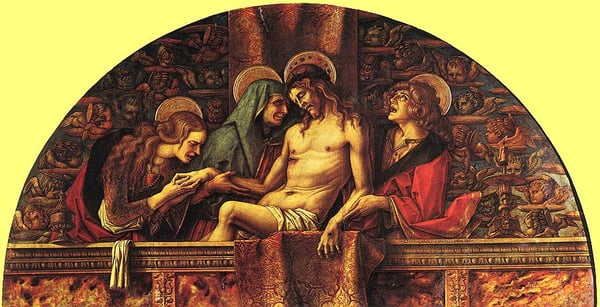
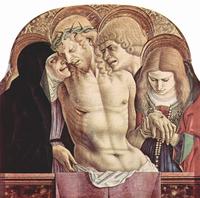
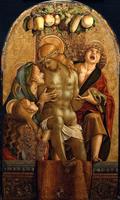
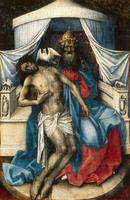
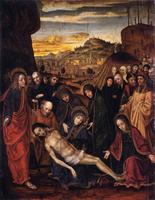
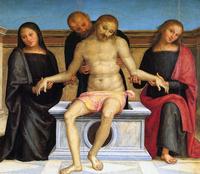
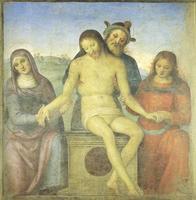
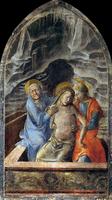
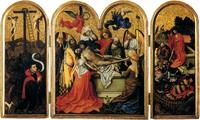
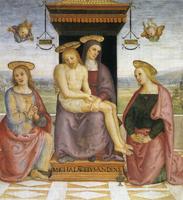
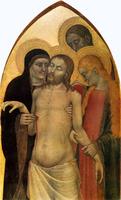
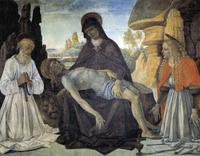
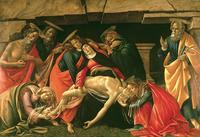
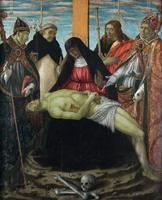
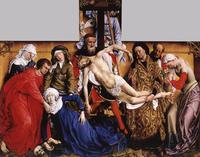
Based solely on the provided facts, the significance of Carlo Crivelli’s "Pietà" lies in its embodiment of Early Renaissance religious painting. Within that context, the work is notable for how it translates a deeply devotional subject—the mourning of Christ—into the stylistic language of the period. As a religious painting, its importance stems from its function as a focus for spiritual contemplation, using the formal innovations of the Early Renaissance (such as careful composition and detailed naturalism) to heighten the emotional and theological impact of the scene. The artwork thus represents a key moment when sacred narrative was given newly vivid, human expression while adhering to the devotional purposes of its genre.