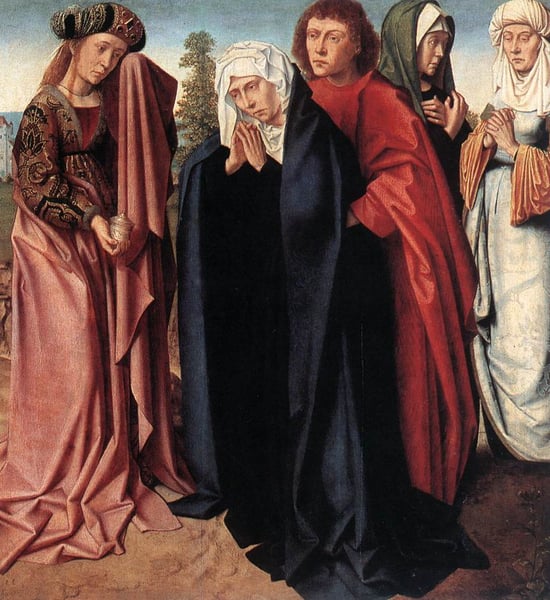
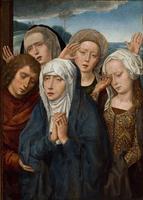
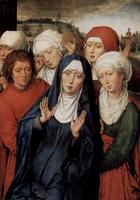
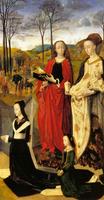
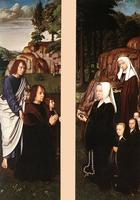
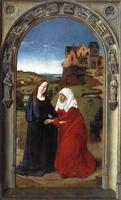
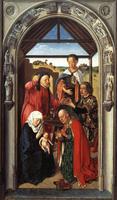
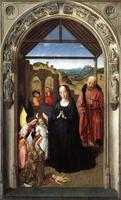
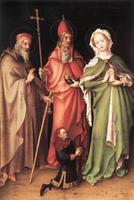
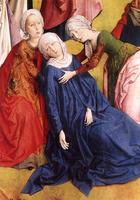
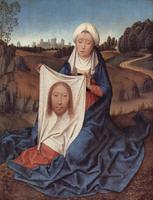
Gerard David's The Holy Women and St. John at Golgotha is a masterful example of Northern Renaissance religious painting, notable for its emotional restraint combined with meticulous realism. As a leading artist of the Bruges school, David employs the characteristic Northern attention to precise detail—rendering fabrics, landscapes, and facial expressions with almost gem-like clarity. The scene captures the grief of the Holy Women and St. John at the foot of the Cross, yet David avoids dramatic exaggeration; instead, sorrow is conveyed through subtle gestures, downcast eyes, and a serene, atmospheric landscape that heightens the spiritual contemplation. The painting’s significance lies in how it synthesizes the devotional intensity of earlier Netherlandish art with a calm, balanced composition that elevates the viewer’s meditative experience—a hallmarks of David’s refined late Gothic style.