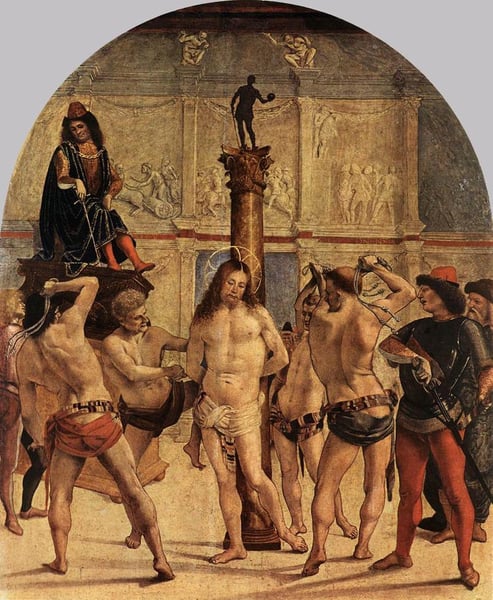
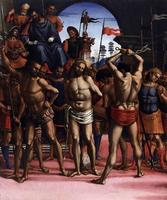
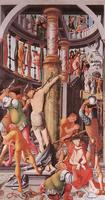
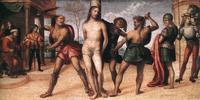
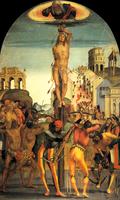
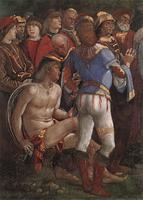
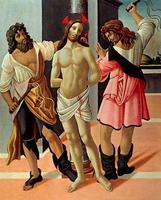
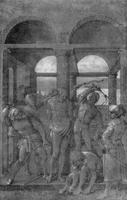
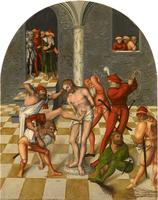
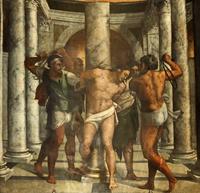
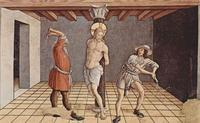
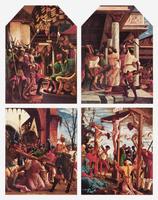
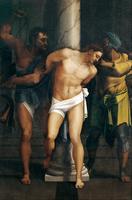
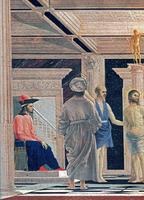
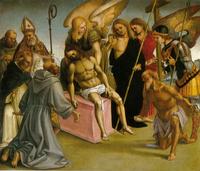
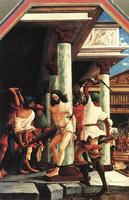
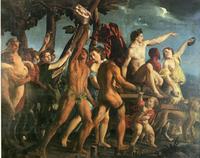
Luca Signorelli’s The Flagellation is a striking example of Early Renaissance religious painting, notable for its advanced treatment of human anatomy and dramatic spatial composition. Signorelli, a master of foreshortening and muscular form, imbues the scene with a physical intensity that prefigures the High Renaissance—particularly influencing Michelangelo’s own figure work. The flagellation moment is rendered with precise linear perspective, drawing the viewer’s eye to the suffering Christ, while the contorted poses of the tormentors demonstrate Signorelli’s interest in dynamic movement and emotional expressiveness. This work stands out within the period for its unflinching focus on corporeal reality as a vehicle for spiritual narrative, bridging the decorative piety of earlier Gothic art with the naturalism that would define Renaissance painting.