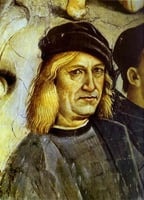
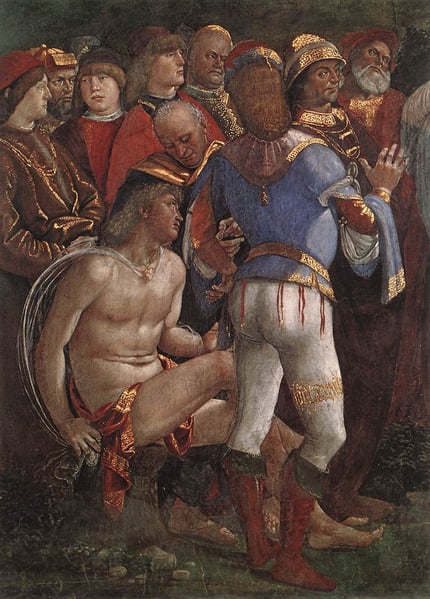
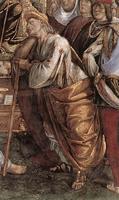
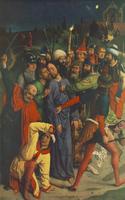
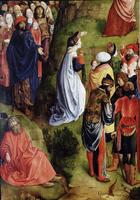
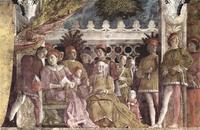
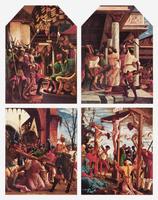
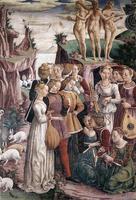
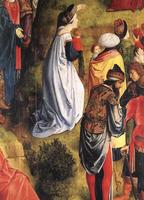
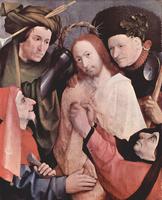
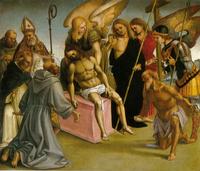
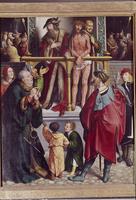
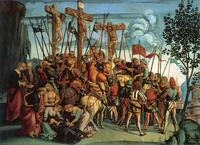
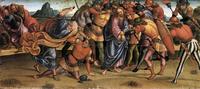
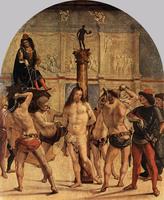
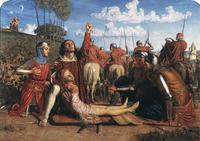
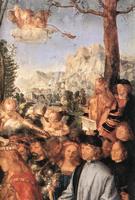
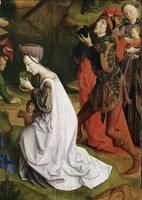
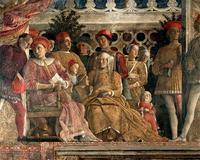
This detail from Luca Signorelli’s Moses’s Testament and Death is significant as an expression of the Early Renaissance’s shift toward naturalism and emotional gravity in religious narrative. Executed within the genre of religious painting, the work belongs to a period when artists increasingly prioritized human anatomy, spatial clarity, and dramatic storytelling over flat, iconic medieval forms. Even as a fragment, the detail emphasizes Signorelli’s ability to capture intense psychological moments—a key innovation of the era—while maintaining the solemn iconography required by a biblical subject. Its importance lies not in individual invention but in how it exemplifies the Early Renaissance ambition to blend divine themes with believable human presence and gesture.