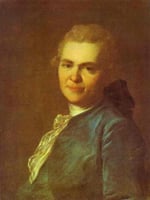
Fyodor Rokotov sanatçısının Portrait of the Poet Vasily Maykov eseri hakkında uzman analizi
Tarz: Rococo · Tür: portrait
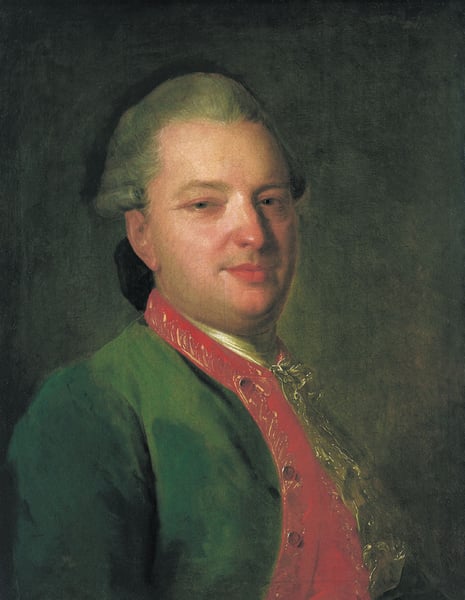
This elegant and introspective work by Fyodor Rokotov, Portrait of the Poet Vasily Maykov, stands as a quintessential example of Russian Rococo portraiture, yet it achieves a distinctive significance by merging that style’s decorative delicacy with a profound intellectual sensibility.
Rendered in the Rococo style, the portrait immediately captures the eye with its soft, diffused light and a palette of muted pastels—pale greens, silvery whites, and subtle rose tones. Rokotov’s masterful brushwork creates a shimmering, almost hazy quality that envelops the sitter, emphasizing the gentle curves of the face and the refined play of shadows. This technique aligns perfectly with Rococo’s celebration of grace, elegance, and intimate charm.
What elevates this work beyond a mere fashionable likeness is its subject: Vasily Maykov, a poet and playwright of the Russian Enlightenment. Rokotov was renowned for his ability to convey the inner life of his sitters, and here he captures not just a nobleman’s poise but the contemplative air of an intellectual. The poet’s direct but soft gaze, the slight asymmetry of his features, and the subtle suggestion of a wry smile all hint at a personality defined by wit, curiosity, and creative depth. The artist avoids the stiff formality of earlier state portraits, instead presenting Maykov as a man of thought and feeling.
This work is significant within its period because it exemplifies the convergence of Rococo elegance with the emerging Russian Enlightenment culture. Rokotov applies the style’s characteristic decorative finesse—seen in the delicate lace of the cravat and the subtle gleam of the blue-gray coat—to a modern, self-consciously intellectual subject. It marks a departure from portraying power solely through regalia; here, status is expressed through sensibility and artistic refinement. In doing so, Rokotov not only immortalized a leading literary figure of Catherine the Great’s era but also demonstrated how Rococo could serve as a vehicle for psychological depth, making the portrait a milestone in Russian portraiture’s turn toward intimate, introspective realism.
Museum / Gallery
Görsel olarak benzer
İlişkili kompozisyon ve renk paletine sahip 20 eser
Alexander Khrapovitsky
Dmitry Levitzky
Eustathius Palmenbah
Dmitry Levitzky
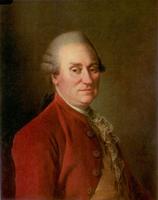
Portrait of director of Capella Mark Fedorovich Poltoratsky
Dmitry Levitzky
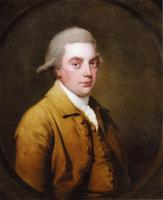
Portrait of a Gentleman
Joseph Wright
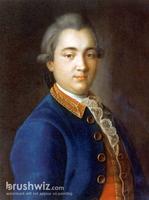
Portrait Of Boris Vladimirovich Sheremetyevo Konnogvardeisky
Ivan Argunov
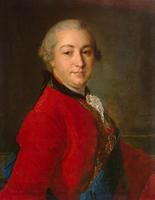
Portrait of Count Ivan Shuvalov
Fyodor Rokotov
Anthony Todd, Postmaster General
George Romney
Baron Alexander Stroganov
Dmitry Levitzky
John Campbell, 4th Earl of Loudoun
Allan Ramsay
Portrait of Gotthold Ephraim Lessing (1729-1781)
Anton Graff
Captain Constantine John Phipps (1744–1792), 2nd Baron Mulgrave
Ozias Humphry
Jean Monnet, Director of the Opera Comique in Paris
Maurice Quentin de La Tour
George Evelyn Boscawen, 3rd Viscount Falmouth (1758–1808)
George Romney
Portrait Of Peter Vladimirovich Sheremeteva
Ivan Argunov
Percivall Pott (1713–1788)
George Romney
Self-portrait
Johann Friedrich August Tischbein
Charles Pinot Duclos, novelist and historian
Maurice Quentin de La Tour
Portrait of an Unknown Man
Dmitry Levitzky
A Portrait of James Bruce of Kinnaird, Explorer
Pompeo Batoni
Portrait of Pieter Caarten
Pompeo Batoni